
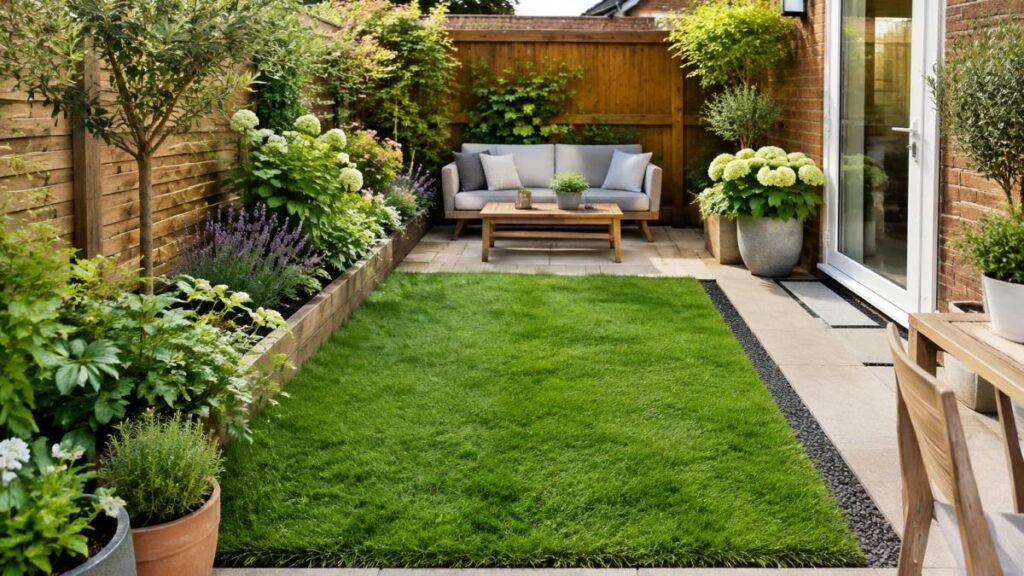
Quick Summary
Start a small property garden by measuring the plot and sketching it to scale, noting sun, shade and drainage before buying plants or paving. Then split the space into clear zones such as seating, planting and utility, keeping a path of at least 600 mm.
- Mark full sun, part shade and full shade areas before choosing any plants.
- Keep one clear path of at least 600 mm so the garden stays easy to walk through.
- Allow 1 m clearance around seating so chairs can move freely.
- Fall paving away from the house at roughly 1:80 so water runs off.
- Ask for a fully itemised paving quote before comparing prices.
Table of Contents
- Start With a Scaled Plan of Your Garden
- Small Garden Layout Ideas That Define Zones
- Best Plants for Small Gardens and How to Layer Them
- How to Make a Small Garden Look Bigger
- Small Garden Paving Ideas and Keeping Costs in Check
- Booking a Garden Design Consultation for Your Property
- Frequently Asked Questions
Start With a Scaled Plan of Your Garden
Last Updated: November 5, 2026
A good garden design for a small property starts on paper, and a well-planned small property garden starts there too, not in the garden centre.
Sunlight matters more than most people expect. Note which parts of the garden get direct sun, which get shade, and where the shade falls at different times of day. A north-facing corner may never see the sun, so it suits shade plants rather than a vegetable bed.
Measuring your space and noting sun, shade and drainage
Use a tape measure to record the length and width of the garden, plus the position of the house, fences, sheds and any existing trees.
Next, walk the garden after rain. Puddles that stay for hours point to poor drainage, which affects which plants will survive. Check the soil with your hands. Clay feels sticky and holds water, while sandy soil feels gritty and drains quickly (UK Soil Observatory).
- Sun: Mark full sun, part shade and full shade areas
- Drainage: Note any standing water after rain
- Soil: Record whether it feels clay, sandy or loamy
- Access: Mark gates, paths and any space needed for bins
Small Garden Layout Ideas That Define Zones
Zones help a small garden feel organised rather than cramped. Split the space into a seating area, a planting area and a utility area, even if each is only a metre across. Clear zones let you use every square metre without the garden feeling crowded. The three layouts below give you starting dimensions you can draw onto your scaled plan.
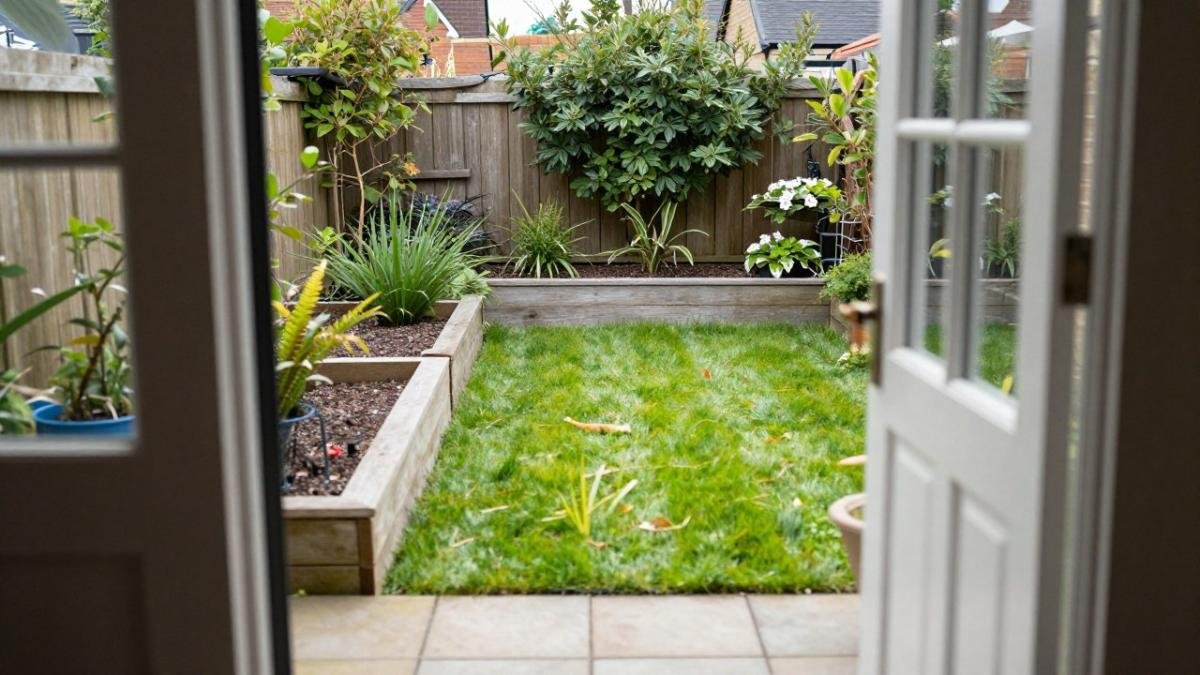
!Scene
Narrow plot layout (roughly 3 m wide by 8 m long)
A plot this narrow works best with a single clear route down one side and planting on the other. Allow a path of 600-900 mm, 600 mm is the minimum for one person to walk comfortably, and 900 mm lets two people pass or a wheelbarrow move through. Run the path along one boundary and keep the remaining 2.1-2.4 m for a narrow border and a small patio. A patio of 2 m by 2 m is enough for a two-seat bistro set; anything smaller becomes a trip hazard once chairs are pulled out.
Square courtyard layout (roughly 5 m by 5 m)
A square plot can feel boxy, so break it with a diagonal. Set a 2.5 m by 2.5 m patio in one corner and run a 600 mm path diagonally to the opposite corner, then fill the two remaining triangles with raised beds or borders. This gives the eye a longer sightline than a straight path and hides the far corner behind planting. Keep at least 1 m between the patio edge and any raised bed so chairs can be pushed back without scraping the timber.
Awkward L-shaped or sloped plot
For an L-shape, treat the two arms as separate zones rather than forcing one layout across the whole plot. Put the seating in the wider arm and the utility area, bins, shed, washing line, in the narrower arm, screened by a slim shrub or trellis. On a slope, terrace the ground in steps of no more than 300 mm rise per 1 m run; steeper steps are hard to use and expensive to build. Each terrace should be at least 1.2 m deep to be usable for seating or planting.
Zone checklist for any small plot
- Put the patio closest to the house for easy access
- Use raised timber beds to define planting areas
- Keep one clear path of at least 600 mm so the garden stays easy to walk through
- Allow 1 m clearance around seating so chairs can move freely
- Screen the utility area rather than hiding it at the end of the garden, where it will be seen from the house
Watch out: drawing a layout without checking door swings and gate openings is the most common planning error, a path that looks generous on paper can be blocked by a shed door or a bin store lid.
The three layouts below give starting dimensions for different plot shapes.
| Plot type | Key dimension | Note |
|---|---|---|
| Narrow plot (3 m × 8 m) | Path 600-900 mm | 600 mm minimum for one person |
| Narrow plot (3 m × 8 m) | Patio 2 m × 2 m | Enough for a two-seat bistro set |
| Square courtyard (5 m × 5 m) | Patio 2.5 m × 2.5 m | Diagonal path of 600 mm |
| Square courtyard (5 m × 5 m) | Clearance 1 m | Between patio and raised bed |
| Sloped plot | Rise up to 300 mm per 1 m | Terrace steps, at least 1.2 m deep |
Best Plants for Small Gardens and How to Layer Them
Plant height and texture make a small garden feel full without making it busy. Choose a few plants for each layer: tall plants at the back or against a fence, medium shrubs in the middle, and low groundcover at the front.
Stick to a limited colour scheme. Two or three colours look calmer than a mix of many, and they make a small space look more intentional.
Get a Free Garden Quote Today →
- Tall: climbers on fences, slim shrubs at the back
- Middle: compact perennials and grasses
- Low: groundcover and edging plants
Pots and containers suit tight spaces well. Group them in odd numbers, such as three pots of different heights, to create interest without taking up floor space.
How to Make a Small Garden Look Bigger
Light colours and simple lines can make a garden feel more spacious. Pale paving and white or cream planting reflect light, while very dark colours can shrink a space visually.
Mirrors and reflective surfaces also help, but use them with care. Place a mirror where it reflects planting rather than a bare fence, so it adds depth instead of looking odd.
Keep the boundaries clean. Run a line of planting along the fence instead of letting it fade into the background. A consistent edge makes the garden look deliberate and tidy.
Small Garden Paving Ideas and Keeping Costs in Check
Paving often takes the largest share of a small garden budget, so plan it carefully. Choose one main material and use it across the patio and paths. Mixing several materials in a small area tends to look busy and raises costs.
Indicative paving costs
Pricing depends on the material, the area, ground preparation and access, so it is best to request a quote for your specific project. Check the hidden landscaping costs that can inflate a paving budget before you agree to any work.
Allow for cuts and breakages, and budget separately for ground preparation, which can add cost if the sub-base needs excavating or the ground is uneven.
Where to save and where not to
- Save on the laying pattern. A simple running bond or stack bond is quicker to lay and wastes less material than a complex herringbone or circular pattern.
- Save on the sub-base only if it is sound. A firm, well-drained sub-base is what stops paving sinking; cutting corners here is the most expensive saving you can make.
- Spend on edging. A solid edge holds gravel and blocks in place and stops the whole patio shifting.
- Spend on drainage. Fall the paving away from the house at roughly 1:80 so water runs off rather than pooling at the door.
Cost-saving priorities, in order
- Measure the area accurately to avoid over-ordering.
- Ask about delivery and preparation costs before agreeing to work; these are often quoted separately and can surprise you.
- Choose a simple laying pattern, which is usually cheaper than a complex one.
- Reuse existing paving where it is sound rather than replacing the whole patio.
- Phase the work, lay the patio first and add paths or beds in a later season.
Watch out: a quote that excludes the sub-base, edging or waste removal can look cheapest and end up costing more once those items are added, ask for a fully itemised quote before comparing.
Contact Chrisam Gardens for a current quote tailored to your garden.
Booking a Garden Design Consultation for Your Property
Planning a small property garden is easier with expert input. A consultation helps you turn your sketch into a layout that suits your sun, soil and budget. To see the full range of work Chrisam Gardens offers, visit the services page. If you already have a garden that needs ongoing care, the garden maintenance service keeps it neat and healthy through the seasons.
Get a Free Garden Quote Today from Chrisam Gardens and start planning a garden that works for your small property.
Frequently Asked Questions
How do you design a garden for a small property?
Start by measuring the space and drawing it to scale, noting where the sun falls, where shade sits and where water pools after rain. Decide what the garden must do for you, such as somewhere to sit, a play area for children or room for vegetables, then divide the plot into two or three zones. Keep circulation paths clear and limit the number of materials to avoid a cluttered result. A simple plan sketched on graph paper usually shows quickly whether a layout will work before any money is spent.
What paving works best in a small garden?
Large format paving slabs make a small space feel calmer because fewer joints break up the surface. Light-coloured materials reflect more light and make the area appear more open, while a consistent material across the patio and paths ties the design together. Porous paving helps with drainage on heavy soils. Pricing varies with the material, size and site access, so request an itemised quote from Chrisam Gardens for current figures before deciding.
Which plants are best for a small garden?
Choose plants that suit the light and soil conditions you have measured, and pick compact varieties rather than large shrubs that will outgrow the space. Layering plants by height, from low ground covers to taller specimen plants at the back, adds depth without taking up much floor area. Evergreens provide structure through winter, while a limited colour palette keeps the planting looking intentional. Check the mature size on plant labels before buying.
Can Chrisam Gardens design a garden for a smaller property?
Yes. Chrisam Gardens offers tailored solutions to suit your garden and budget. To discuss your plot and get a quote for your project, contact Chrisam Gardens.
