
Last Updated: November 14, 2026
Quick Summary
Hard landscaping is the built part of a garden, including patios, paths, walls, decking, fencing and steps, while soft landscaping is the living part, including lawns, plants, shrubs, trees and planting beds. Hard landscaping gives structure and function, and soft landscaping adds colour, texture and life.
- Hard landscaping uses stone, brick, concrete, timber and metal and generally stays put for years.
- Soft landscaping needs regular attention, such as mowing, feeding, pruning and watering.
- Hard landscaping usually carries the larger upfront cost, while soft landscaping has ongoing spending.
- Build hard features before planting so new beds are protected from machinery and foot traffic.
- Ask for quotes that itemise hard and soft work separately to compare like for like.
Table of Contents
- What Hard and Soft Landscaping Mean
- Key Differences Between Hard and Soft Landscaping
- Hard Landscaping Materials and Features
- Soft Landscaping Examples: Plants, Turf and Planting Beds
- Pros and Cons of Each Approach
- Hard vs Soft Landscaping Cost and Budget Planning
- Landscaping Maintenance Over Time
- Drainage, Planning Considerations and Installation Order
- Planning Your Garden: Combining Both Approaches with Chrisam Gardens
- Frequently Asked Questions
What Hard and Soft Landscaping Mean
Hard landscaping is the built part of a garden: patios, paths, walls, decking, fencing and steps. Soft landscaping is the living part: lawns, plants, shrubs, trees and planting beds. The difference matters because each one behaves differently over time, costs differently and needs different care.
If you are planning a garden, the simplest way to think about it is this. Hard landscaping gives the space its structure and function. Soft landscaping gives it colour, texture and life. A garden with only one of the two usually feels unfinished.
Hard landscaping is the framework. It defines where you walk, where you sit, where water goes and where the boundaries sit. Soft landscaping fills that framework with planting and natural character. Many homeowners start with the built elements because they are harder to change later.
Key Differences Between Hard and Soft Landscaping
The main differences come down to materials, lifespan and upkeep. Hard landscaping uses stone, brick, concrete, timber and metal. Once installed, it generally stays put for years with only occasional cleaning and repointing. Soft landscaping uses plants, turf and soil, which grow, spread and die back, so it needs regular attention.
Cost behaviour differs too. Hard work tends to carry the larger upfront bill because of materials and labour, while soft work is cheaper to start but needs ongoing spending.
Design function is another split. Hard features handle foot traffic, drainage routes and privacy screens. Soft features soften edges, provide shade, attract wildlife and help manage rainfall where the soil can absorb it. Neither does the other’s job well.
Hard Landscaping Materials and Features
Hard landscaping is built from materials chosen for strength and weather resistance. Natural stone and block paving suit patios and driveways. Timber works well for decking and fencing but needs treating against rot. Concrete is versatile for paths and retaining walls. Brick and metal add character to edging, steps and garden features.
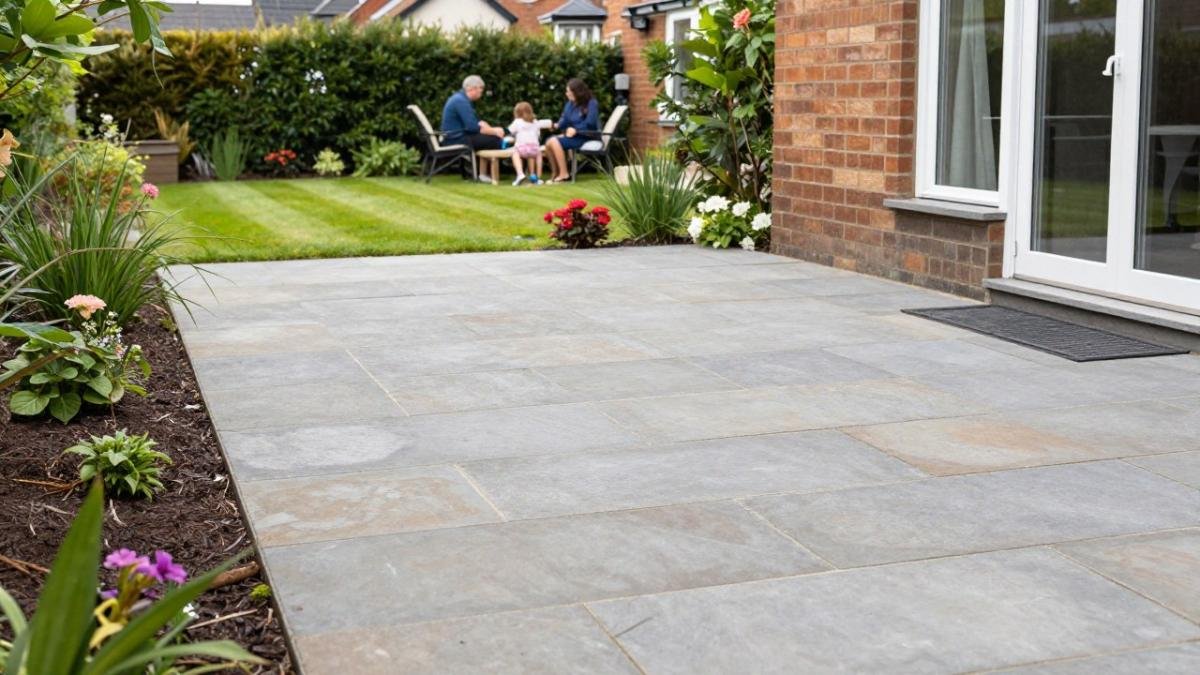
A newly laid natural stone patio beside a lawn and planting border gives a tidy, well-proportioned look. The patio provides a practical seating area, while the border softens the transition into the planting.
When choosing materials, consider the surface finish for slip resistance, the thickness suited to vehicle loads, and how the surface will sit with rainfall. Good sub-base preparation matters more than the top surface, because most paving failures start underneath.
Soft Landscaping Examples: Plants, Turf and Planting Beds
Soft landscaping covers lawns, planting borders, shrubs, climbers, potted displays and trees. Turf is one of the quickest ways to create a green, usable lawn. A level, healthy surface that establishes well depends on the ground being properly prepared.
Planting beds bring seasonal interest. Mix evergreen shrubs for year-round structure with perennials for flowers and texture. Climbing plants can soften fences and walls, while trees add height and shade.
Plant choice should match your conditions. Check how much sun each bed gets, how well the soil drains and how large the plant will grow at maturity. Planting something too big for its position is one of the most common and costly mistakes.
Pros and Cons of Each Approach
Hard landscaping
- Pros: durable, low day-to-day maintenance, defines layout and function, adds usable space and value.
- Cons: higher upfront cost, harder to alter once built, can feel cold or visually heavy if overused.
Soft landscaping
- Pros: softens the look, adds colour and wildlife value, generally lower initial cost, easy to change over time.
- Cons: needs regular upkeep, plants can fail or outgrow their space, offers little structure on its own.
For most gardens the trade-off is clear. Hard work gives you durability and function. Soft work gives you beauty and adaptability. Watch out: a garden built entirely of hard surfaces can look bare, while one built only from plants often lacks a usable seating or walking area.
Hard vs Soft Landscaping Cost and Budget Planning
Cost is where hard and soft landscaping diverge most sharply, and it is the question most homeowners ask first. Pricing depends on access, ground conditions, material grade and project scope, so for current prices please request a quote from Chrisam Gardens. Because material choices shape both the upfront cost and the character of a hardscape, Fratesi Landscaping can help frame stonework as a lasting design decision rather than a line item alone.
Indicative hard landscaping costs
- Block paving patio or driveway: roughly £60-£120 per m² supplied and laid, depending on block type and sub-base depth.
- Natural stone paving: roughly £90-£180 per m², with sandstone at the lower end and granite or porcelain at the upper.
- Timber decking: roughly £70-£140 per m², with composite decking typically £120-£200 per m².
- Fencing: roughly £60-£120 per linear metre for close-board timber, more for bespoke or slatted designs.
- Retaining walls: roughly £150-£350 per m² of face, driven by material, height and footing requirements.
Indicative soft landscaping costs
- Turf laying: roughly £10-£20 per m² for cultivated turf supplied and laid, plus soil preparation.
- Planting borders: roughly £25-£60 per m² for soil improvement, shrubs and perennials at a modest size.
- Trees: roughly £80-£300 each for a container-grown specimen of 2-3 m, plus staking and aftercare.
- Mulch and soil improver: roughly £5-£12 per m².
Upfront versus whole-life cost
The upfront bill for hard landscaping is usually larger because materials and groundworks dominate. Soft landscaping is cheaper to install but carries ongoing spend: mowing, feeding, pruning, replacement plants and watering in the first two summers. A useful way to compare is to estimate a ten-year cost. A patio may need only occasional cleaning and repointing over that period, while a lawn will need regular mowing and feed, and borders will need mulching and some plant replacement. Hard landscaping is generally more durable, while soft landscaping is generally easier to change, replanting a border is usually cheaper than replacing a patio.
Budgeting rules of thumb
Budget splits between hard and soft landscaping vary with the brief, so ask for a quote that shows each element separately.
| Element | Typical cost driver | Budget note |
|---|---|---|
| Patio or paths | Materials, sub-base, labour | Usually the largest single item |
| Fencing and walls | Material type, height, footings | Long-term investment in privacy |
| Turf and planting | Area, soil preparation, plant size | Lower upfront, ongoing upkeep |
| Drainage and levelling | Site conditions, access | Easy to underestimate |
Watch out: quotes that bundle hard and soft work into one figure make it hard to compare like for like, ask for them itemised separately, and confirm whether waste removal, soil import and aftercare are included.
Indicative costs per m² for hard landscaping materials
Landscaping Maintenance Over Time
Hard landscaping needs periodic checks. Clear debris and moss from paving, reset any loose slabs, keep drainage channels clear and inspect fencing for rot or loose posts. Timber should be re-treated on a regular cycle, and joints in block paving may need re-sanding.
Soft landscaping needs more frequent attention. Lawns require mowing, feeding and aeration. Beds need weeding, pruning and mulching. Plants should be checked for disease and watered during dry spells, especially in the first year after planting.
Regular maintenance keeps the garden healthy and prevents small issues becoming expensive repairs.
Drainage, Planning Considerations and Installation Order
Drainage and permeability
Hard surfaces shed rainwater rather than absorbing it, so every patio, path and driveway needs a designed route for runoff. Permeable paving, gravel, resin-bound surfaces and open-jointed stone allow water to pass through to the sub-base, reducing pressure on drains and lowering flood risk. Where ground conditions are clay-heavy or the water table is high, a soakaway or attenuation system may be needed. Soft landscaping helps here: planted beds, lawns and trees intercept rainfall and slow runoff, and a border placed downhill of a patio can act as a natural soakaway. A common pattern is to combine permeable hard surfaces with generous planting so the garden manages water rather than exporting it.
Planning permission and boundary considerations
Many domestic landscaping projects fall within permitted development, but not all. Planning rules for hard surfaces, decking and walls vary, so check whether consent is needed before work starts. Properties in conservation areas, national parks or listed buildings face tighter rules. Boundary positions should be checked against your deeds and title plan, and where a fence or wall is on a boundary you share, the party wall and boundary rules may apply. Always confirm with your local planning authority before work starts, rules differ across the UK and local policies can be stricter than the national framework.
Installation order
Sequencing prevents rework and protects new planting. A typical order is:
- Survey and site clearance, establish levels, services and access.
- Drainage and services, install land drains, soakaways and any ducting before surfaces go down.
- Groundworks and sub-base, excavate, compact and lay sub-base for hard features.
- Hard landscaping, build patios, paths, walls, steps and fencing.
- Soil preparation, import or improve topsoil in planting areas, allowing for settlement.
- Soft landscaping, lay turf, plant beds and trees, then mulch and water in.
Building hard elements first protects new planting from heavy machinery and foot traffic, and it lets soil settle before turfing. Watch out: planting before drainage and groundworks are finished is one of the most common causes of failed lawns and waterlogged borders.
Planning Your Garden: Combining Both Approaches with Chrisam Gardens
The strongest gardens combine hard and soft landscaping rather than choosing between them. Start by deciding how you will use the space, then fix the built structure, then add planting that suits the light, soil and maintenance you are willing to commit to.
A family garden, for example, might have a durable patio for seating, a lawn for play, fencing for safety and privacy, and planting borders along the edges for colour. Each element supports the others.
If you are weighing up a project, you can explore the basics of hardscaping and how it forms the foundation of a garden, or read our complete beginner’s overview of garden landscaping before committing to a plan. Chrisam Gardens offers complete hard and soft landscaping, including professional turf installation and long-lasting fencing. Book a professional turf laying service if a lawn is part of your plans, or see the benefits of professional turf laying for a clearer picture of what it involves.
To get a clear picture of costs and a plan built around your garden and budget, request a free garden quote from Chrisam Gardens today.
Ready to plan a garden that balances structure and planting? Chrisam Gardens combines skilled hard and soft landscaping with clean, respectful workmanship and attention to every detail. Get a free garden quote from Chrisam Gardens to start your project.
Frequently Asked Questions
What is the difference between hard and soft landscaping?
Hard landscaping covers the built, non-living elements of a garden, such as patios, paths, decking, retaining walls, fencing and steps, usually made from stone, brick, concrete, timber or metal. Soft landscaping covers living elements such as lawns, plants, shrubs, trees, planting borders and soil. Hard landscaping gives a garden its structure and day-to-day function, while soft landscaping adds colour, texture and natural character. Most well-planned gardens use both, with the built features defining the layout and the planting softening and filling it.
What are examples of hard landscaping?
Common examples of hard landscaping include patios, pathways, driveways, decking, retaining walls, steps, edging, garden fencing and raised beds built from brick or timber. Materials such as natural stone, concrete paving, gravel and metal are also used for these features. Hard landscaping tends to be the most durable part of a garden, but it also needs proper ground preparation and drainage to stay level and safe over the years.
What are examples of soft landscaping?
Soft landscaping examples include lawns, turf, flower beds, shrub and hedge planting, trees, climbing plants, potted plants and ornamental grasses. It also covers the soil and mulch that support them. Soft landscaping brings seasonal colour and wildlife value, and it can soften the hard edges of patios and walls. Turf and planting need regular care such as watering, mowing and feeding to stay healthy.
Should hard landscaping or soft landscaping come first?
Hard landscaping is usually completed first. Patios, paths, walls, fencing and drainage should be installed before planting, because heavy machinery and building work can damage turf and plants. Soil preparation and levelling come before any planting or turfing. Once the built features are in place, the soft landscaping can be added, which also protects new lawns and borders from construction damage.
Does hard landscaping require more maintenance than soft landscaping?
Hard landscaping generally needs less routine maintenance, but it is not maintenance-free. Paving may need occasional weed control, jointing sand or cleaning, timber decking needs periodic treatment, and drainage must be kept clear. Soft landscaping needs regular attention, including mowing, watering, pruning, feeding and weeding. The overall maintenance load depends on how much planting a garden contains compared with built features.
Can you combine hard and soft landscaping in a small garden?
Yes. Many smaller gardens work well with a simple hard landscaping structure, such as a compact patio and a single path, combined with planting borders, a small lawn or raised beds. Keeping the hard surfaces to a sensible proportion leaves room for plants and helps the space feel open rather than crowded. A balanced layout with clear zones for sitting, walking and growing usually suits small gardens best.
