
Last Updated: November 1, 2026
Quick Summary
Professional turf laying gives you a lawn that establishes evenly, drains properly and becomes usable within weeks rather than months. Most of the value comes from careful ground preparation, which crews carry out before the turf is laid. This is what separates a long-lasting lawn from one that sinks, puddles or develops gaps.
- Preparation stripping is usually done to a depth of about 25-40 mm.
- Loosen the top 100-150 mm of soil so the new turf can knit in.
- Check drainage by digging a test hole and filling it with water.
- Autumn and spring are generally the most reliable times to lay turf in the UK.
- Turf usually takes about four to six weeks to root firmly.
Table of Contents
- What Professional Turf Laying Actually Involves
- Benefits of Professional Turf Laying for Your Lawn and Property
- How to Prepare Ground for Turf Properly
- Choosing the Best Time to Lay Turf
- Turf Laying Mistakes That Undermine the Result
- How Long Turf Takes to Establish and What Aftercare Involves
- Frequently Asked Questions
What Professional Turf Laying Actually Involves
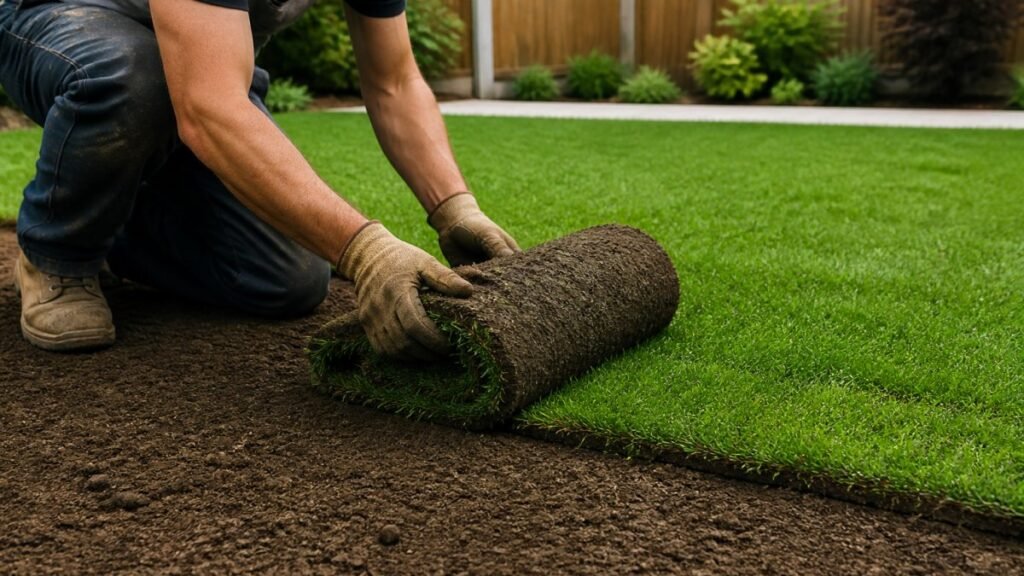
Professional turf laying is more than rolling grass onto soil. If you want a professional to handle the whole job, book turf laying in Milton Keynes.
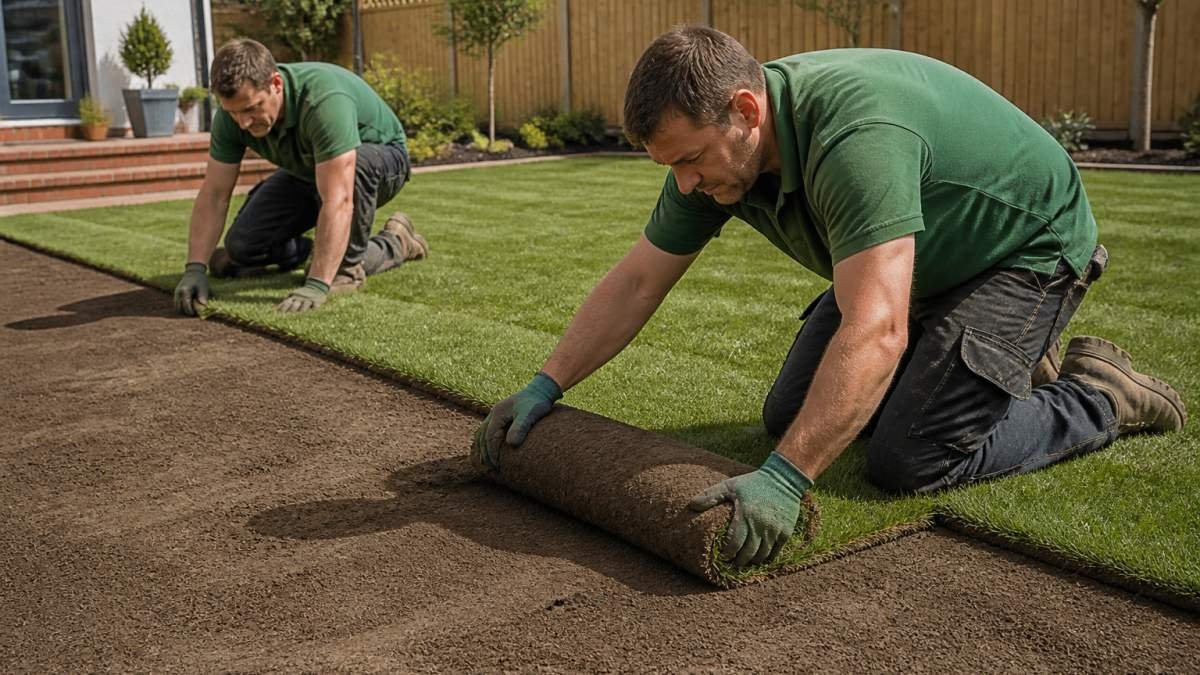
The work starts before any turf arrives. See what a turfing installation covers from preparation through to the finished lawn. Crews check levels, remove old growth and debris, and assess how the soil drains.
Many homeowners underestimate the preparation stage. A good installer treats it as the foundation of the job, not an afterthought. If you want to see how the team approaches ongoing lawn care alongside installation, explore our garden maintenance services.
Benefits of Professional Turf Laying for Your Lawn and Property
The benefits of professional turf laying fall into four practical areas: how the lawn performs, how it looks, what it costs to keep, and how quickly it becomes usable. Each one depends on work that happens before the turf is unrolled, which is why installation quality matters more than the turf itself.
A lawn that establishes evenly. Trained crews get the levels, edges and joins right, which avoids the ridges, gaps and overlapping seams that appear in many DIY lawns.
Better rainwater management. Correct drainage and soil preparation help rainwater soak away rather than pool on the surface.
Kerb appeal and property value. A well-laid lawn improves kerb appeal, and a neat, healthy garden signals that the property has been looked after.
A note on natural versus artificial turf. Most of the benefits above apply to living turf.
For background on how soil and grass choice affect long-term performance, the [Royal Horticultural Society advice on lawn care | rhs.org.uk] is a useful reference when comparing options.
How to Prepare Ground for Turf Properly
Preparation decides how well turf takes root, and it is the stage most homeowners underestimate. A professional installer treats it as the foundation of the job, not an afterthought.
1. Clear and strip. Remove old turf, weeds, stones, roots and debris. On a renovation, this usually means stripping the old lawn to a depth of about 25-40 mm and disposing of it.
2. Loosen and improve the soil. Loosen the top 100-150 mm so the new turf can knit into it. Heavy clay compacts easily and holds water, so it usually needs organic matter or grit worked in to improve structure (Clay soils).
3. Level and firm. Fill low spots and remove high ones so the surface is even, then firm the bed in stages. Skipping this step is the most common reason a lawn sinks or develops bumps after laying.
Checking Drainage and Soil Structure
Before laying anything, check how water moves through the ground. Dig a small test hole and fill it with water. If it drains within a few hours, the soil is free-draining. If water sits for longer, the site needs drainage improvement or added organic matter before turf goes down. On heavy clay, a professional may recommend a drainage layer, sand slits or a raised bed rather than laying directly onto the existing soil.
Get a Free Garden Quote Today →
Soil structure matters as much as drainage. Compacted soil, often caused by building work or years of foot traffic, restricts root growth and causes water to sit on the surface. Aeration or deeper cultivation before laying is often needed on new-build gardens, where the topsoil may be thin or the subsoil compacted.
Professional preparation versus DIY
The steps above are simple to describe and hard to execute well. A DIY installation typically takes a full weekend or more for an average garden, requires hired equipment for stripping and levelling, and depends on judging soil condition and drainage correctly, the two areas where inexperienced installers most often go wrong. Common DIY outcomes include uneven levels, poor joins, turf laid on compacted ground and drainage problems that only show up months later.
If you are comparing quotes, ask each installer what they will do at the preparation stage, stripping depth, soil testing, drainage work and levelling, rather than comparing turf price alone. Two quotes for the same lawn can differ mainly in what happens before the turf is laid.
The article breaks ground preparation into clear stages, each with specific depths and checks.
| Step | What to do | Key detail |
|---|---|---|
| Clear and strip | Remove old turf, weeds, stones and roots | Strip to about 25-40 mm depth |
| Loosen soil | Loosen the top layer so turf can knit in | Loosen top 100-150 mm |
| Improve soil | Work in organic matter, compost or topsoil | Depends on clay or sandy soil |
| Level and firm | Fill low spots, remove high ones, firm in stages | Skipping it causes sinking |
| Check drainage | Dig a test hole and fill it with water | Water draining within hours is ideal |
Choosing the Best Time to Lay Turf
Autumn and spring are generally the most reliable times to lay turf in the UK. The ground is usually moist and the temperature mild, so roots establish without the stress of summer heat or winter frost. Laying in very hot, dry weather means constant watering just to keep the turf alive.
Frozen or waterlogged ground is best avoided. Turf laid on frost can lift as the ground thaws, and laying on saturated soil compacts it. A good installer checks the forecast and the ground condition before booking the job, and that timing advice is part of the service.
Turf Laying Mistakes That Undermine the Result
The most common mistake is laying turf on poorly prepared ground. Uneven levels, compacted soil and missing drainage cause problems that appear months later. Another frequent error is letting turf dry out before or after laying. Turf should be laid within a day of delivery and watered promptly.
Watering is also where many homeowners go wrong. Too little water stops roots establishing, while too much keeps the soil waterlogged and encourages disease. Consistent, measured watering in the first weeks makes the biggest difference. If patches go yellow after laying, the cause is often [a watering or nutrient issue covered in this guide on yellowing grass | page:4].
Poor joins and gaps are another common issue. Turf pieces should be butted tightly, with staggered joins, so the lawn knits together. Gaps left open tend to dry out and show as lines across the finished lawn.
How Long Turf Takes to Establish and What Aftercare Involves
Turf usually takes about four to six weeks to root firmly, though full establishment can take longer depending on the season and the weather. During this period the lawn needs regular watering, careful mowing once the grass has grown, and protection from heavy use. Avoid walking on new turf until it has rooted.
Aftercare continues beyond the first month. Feeding, mowing at the correct height and monitoring for weeds all keep the lawn in good condition. If you would rather hand this ongoing work to a professional, [Chrisam Gardens’ garden maintenance team | page:5] can take on regular upkeep once the lawn is established.
Establishment times vary, so it helps to ask your installer for a clear aftercare schedule. A good one covers watering frequency, when the first mow should happen, and when the lawn can take normal use.
Frequently Asked Questions
What are the benefits of having turf professionally laid?
Professional turf laying means the ground is assessed, levelled and drained before any turf goes down, which is the step most DIY jobs skip. A professional team checks soil structure, grades the surface so water runs away from the house, and lays the turf with tight, well-jointed seams so it roots evenly. Chrisam Gardens offers professional turf installation. Pricing depends on the size of the area, ground condition and access, so request a quote from Chrisam Gardens for a figure that reflects your garden.
Is it worth paying a professional to lay turf?
For most gardens it is, because the costly problems with turf usually come from preparation rather than the laying itself. Poor levels, compacted soil and inadequate drainage cause dips, puddles and patchy growth that take time and money to fix later. A professional installer will spot these issues before the turf is down. If you have a small, flat area and enjoy the work, you can lay it yourself, but a larger or sloped garden often benefits from an experienced team. Chrisam Gardens can advise which approach suits your site when you request a free garden quote.
When is the best time to lay turf?
Autumn and spring are generally the most reliable seasons in the UK, because the soil is moist and temperatures are mild, which helps the roots establish without constant watering. Laying in the middle of summer means the turf dries out quickly and needs frequent watering, while laying in deep frost or waterlogged conditions makes the ground difficult to work. Your installer will also consider the soil condition on the day, since turf should only be laid on ground that is workable and not frozen or saturated.
How long does newly laid turf take to establish?
Newly laid turf usually takes around four to six weeks to root into the soil beneath, though the full strength of the lawn can take several months to develop. During the first two weeks it should be kept well watered, typically daily in warm weather, and kept off heavy use. After that, you can gradually reduce watering and begin light mowing once the grass has grown and the turf no longer lifts when gently tugged. Regular aftercare in these early weeks is one of the main factors in whether the lawn settles evenly.
If you are considering a new lawn, Chrisam Gardens can assess your garden and recommend the right approach. Get a free garden quote today and find out how professional turf laying can give your property a lawn that looks good and lasts.
