
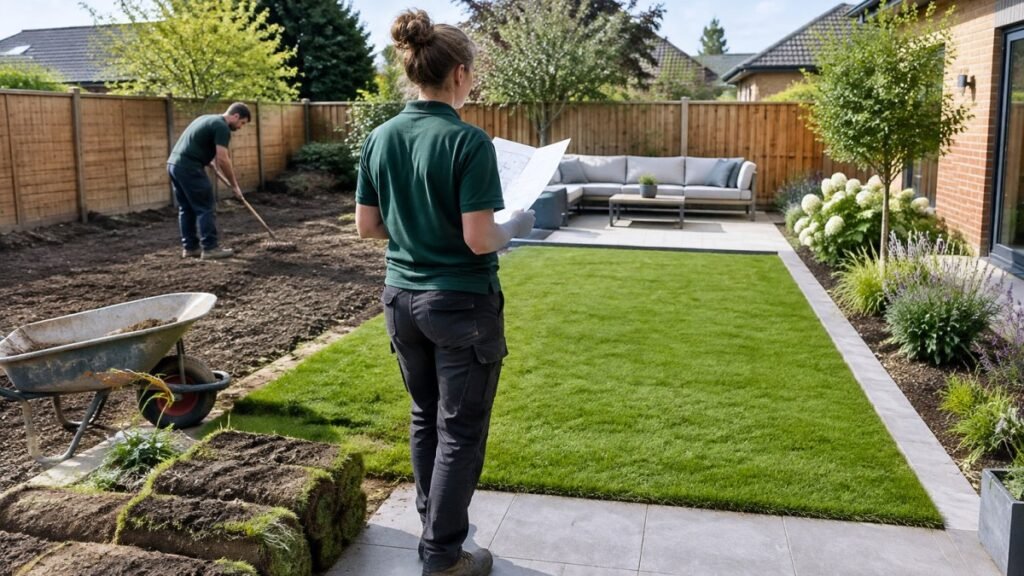
Last Updated: November 4, 2026
Quick Summary
A garden makeover in 2026 typically costs £5,000-£10,000 for a complete transformation of a large rear garden of around 100 m², while a small refresh can start from about £500. A full structural renovation can cost more than £20,000, with the final figure driven mainly by scope.
- Site access, clearance, ground conditions and material choice all move the price of a garden makeover.
- Hard landscaping usually takes the majority of a transformation budget and is the hardest part to change later.
- Ask for hard and soft landscaping to be priced separately so you can compare quotes fairly.
- Confirm waste disposal, soil removal and unforeseen ground issues in writing before accepting a figure.
- Check that the quote includes clearance, named materials, labour and a payment schedule tied to completed work.
Table of Contents
- What a Garden Transformation Typically Costs in 2026
- Factors That Drive Landscaping Prices Up or Down
- Hard Landscaping vs Soft Landscaping: Where the Money Goes
- What to Include in a Landscaping Quote
- Landscaping Quote Checklist Before You Sign
- Hidden Costs to Ask About After the Quote
- How to Compare Landscaping Quotes Fairly and Book Your Garden Transformation
- Frequently Asked Questions
What a Garden Transformation Typically Costs in 2026
If you want to get a garden transformation quote in 2026, expect a wide range. A complete transformation of a large rear garden of around 100 m² is typically estimated at £5,000-£10,000, according to Checkatrade guide to garden makeover costs. A small refresh can start from about £500, while a full structural renovation can cost more than £20,000, as Yorkshire Lawn and Garden pricing overview explains.
The gap comes down to scope. A refresh might mean new planting, a tidied lawn and a few new edging stones. A transformation usually means new levels, drainage, paving and structure. A quote from Chrisam Gardens is based on the work involved in your garden.
[PAGE_LINK: Garden Transformation: Creating Lasting Outdoor Impact | page:3]
Garden size is a useful starting point, but it is not the whole story. Access, soil condition and the number of trades involved all shift the figure.
Factors That Drive Landscaping Prices Up or Down
Several factors move the price of a garden makeover, sometimes more than size does. Knowing them helps you read a quote and spot where money is going.
- Site access. Materials that must be carried through a narrow side gate take longer than materials delivered to the front of the house.
- Site clearance. Removing old decking, overgrown shrubs or rubble adds labour and waste disposal costs.
- Ground conditions. Poor drainage or heavy clay may need extra preparation before any paving or turf goes down.
- Material choice. Natural stone, large-format porcelain and premium timber cost more than concrete paving or treated softwood.
- Design complexity. Multi-level designs, curves and built-in features take more planning and more hours on site.
Seasonal timing can also affect availability, so it is worth asking about dates when you request a quote.
Hard Landscaping vs Soft Landscaping: Where the Money Goes
Most of a garden budget falls into two groups. Hard landscaping covers the structure: paving, walls, fencing, steps, decking and drainage. Soft landscaping covers the living parts: lawns, planting, trees and soil preparation. Understanding how the money splits between them is the single most useful thing you can do before you request a quote, because it tells you where a supplier’s figure is likely to be concentrated.
As a working rule, hard landscaping usually takes the larger share of a transformation budget, commonly the majority of the total on a full makeover. It involves groundwork, materials and skilled labour, and it is the part that is hardest and most expensive to change later. Soft landscaping is cheaper per item, but good soil preparation and quality turf or plants are what make the finished garden last.
A typical split on a mid-range transformation looks roughly like this:
- Groundwork, levels and drainage, often the largest single line, because it is labour-heavy and must be right before anything else goes down.
- Paving, walls, steps and decking, material-driven; natural stone and large-format porcelain sit at the top, concrete paving and treated softwood at the bottom.
- Fencing and boundaries, priced per linear metre and sensitive to access and post-fixing method.
- Turf, planting and soil improvement, usually the smallest hard-cost line but the one that most affects how the garden looks in year one.
- Lighting, irrigation and features, optional add-ons that are cheapest to install while the ground is already open.
A practical rule is to put money into the structure first. A well-drained, properly levelled base lets you add planting later without tearing things up. Chrisam Gardens offers tailored solutions to suit your garden and budget, and can talk through priorities with you.
This is also where the DIY-versus-professional decision matters most. A homeowner can realistically handle soft landscaping, planting, laying turf on prepared ground, spreading mulch, painting a fence, and reduce the professional quote total without compromising the finish. Hard landscaping is different: paving falls within the scope of building regulations where it affects drainage and surface water, and poorly built retaining walls, steps or drainage can fail expensively. Most practitioners find that DIY savings on structural work are outweighed by the cost of correcting it later. A sensible approach is to ask your supplier to quote the hard landscaping as a fixed package and the soft landscaping as a separate, optional line, so you can see exactly what you would save by doing the planting yourself.
Watch out: a quote that bundles hard and soft landscaping into one total makes it harder to compare suppliers or to judge whether a DIY element is worth doing, ask for the two groups to be priced separately. Hidden costs to watch for can also catch you out after the initial figure.
The table below sets out how the main cost groups in a garden transformation compare, based on the points made above.
| Cost group | Typical share or weight | Key note |
|---|---|---|
| Hard landscaping | Usually the majority of the total | Hardest and most expensive to change later |
| Soft landscaping | Cheaper per item | Soil preparation and quality turf or plants make it last |
| Groundwork, levels and drainage | Often the largest single line | Labour-heavy and must be right first |
| Paving, walls, steps and decking | Material-driven | Natural stone and porcelain top; concrete and treated softwood bottom |
| Fencing and boundaries | Priced per linear metre | Sensitive to access and post-fixing method |
| Turf, planting and soil improvement | Usually the smallest hard-cost line | Most affects how the garden looks in year one |
| Lighting, irrigation and features | Optional add-ons | Cheapest to install while the ground is open |
What to Include in a Landscaping Quote
A useful landscaping quote is specific. Vague totals make it hard to compare suppliers, and they hide the items most likely to cause extra charges later.
A complete quote should set out: see what a full garden transformation service covers.
Get a Free Garden Quote Today →
- Site clearance and waste disposal
- Groundwork, levels and drainage
- Materials, with quantities and product names
- Labour, with an estimated number of days
- Any fencing, lighting or irrigation included
- Planting and turf specification
- Project timeline and payment schedule
Ask whether the quote is fixed or an estimate. A fixed price is easier to budget for, but only if the scope is clearly written down. Our pointed questions to ask before hiring a landscaper can help you check this.
Landscaping Quote Checklist Before You Sign
Before you sign anything, work through this checklist:
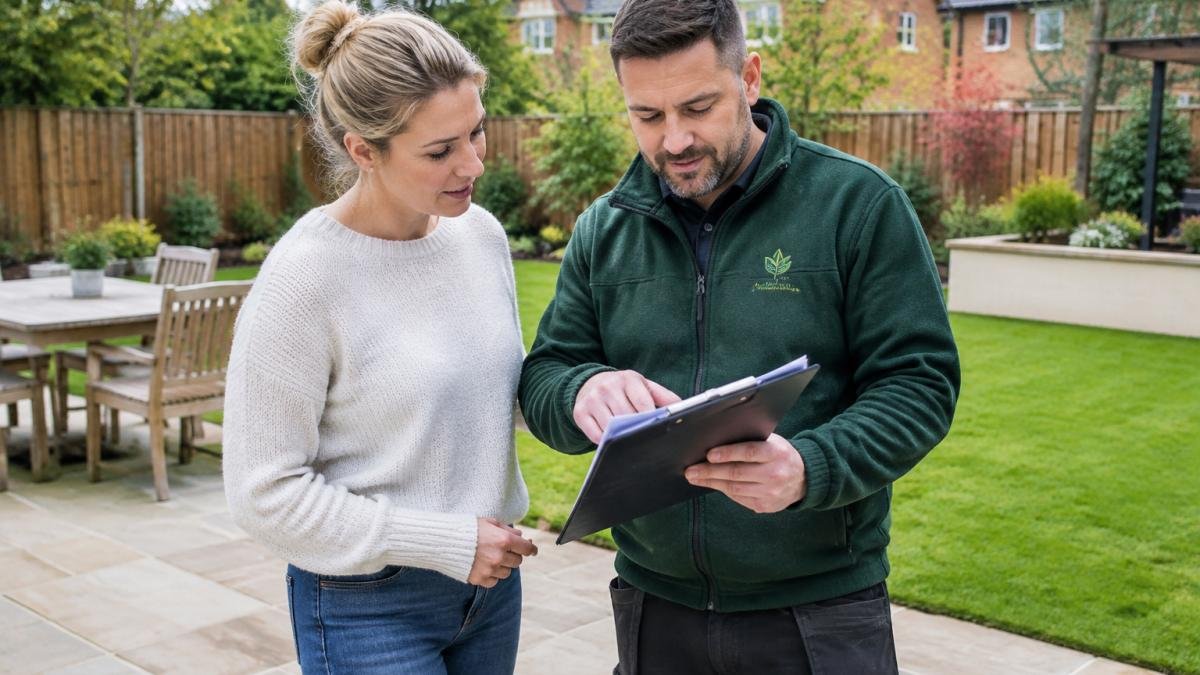
- Does the quote describe the full scope, including clearance?
- Are materials named with quantities?
- Is labour shown separately or clearly included?
- Is there a start date and a realistic finish date?
- Are payment stages tied to completed work?
- Is there a written warranty on workmanship?
- Who handles waste disposal and at what cost?
- Are any design changes priced separately?
A quote that answers most of these questions is far easier to trust than one that does not. If a supplier is unwilling to itemise, treat that as information in itself.
Watch out: a quote that leaves out clearance or waste removal is the most common source of surprise invoices. Ask about both before you accept a figure.
Hidden Costs to Ask About After the Quote
Even a detailed quote can miss costs that only appear once work begins. Most guides stop at the initial estimate; the difference between a smooth project and a stressful one is usually how well these post-quote costs were anticipated. Raising them before you agree a start date is the single best protection against surprise invoices.
- Unforeseen ground issues. Hidden services, old foundations, buried rubble or poor drainage found during digging. The mechanism is simple: a quote is priced on what can be seen, and excavation reveals what cannot. Ask what the supplier’s day rate or hourly rate is for unforeseen work, and whether they will stop and agree a price before continuing.
- Soil quality and disposal. Heavy clay, contaminated soil or a high water table may need removal and replacement rather than reuse. Disposal is usually charged by weight or by load, and spoil is heavy, a small-looking mound can translate into several skip loads. Ask whether the quote assumes the soil can be reused on site or taken away.
- Drainage fixes. If surface water has nowhere to go, a patio or lawn will fail within a season. Connecting to a soakaway or existing drainage may sit outside the original scope. Ask how the quote handles surface water and whether any connection work is included.
- Delivery charges. Bulk materials such as aggregate, soil and stone can carry separate delivery fees, and narrow access may mean a smaller vehicle and more trips. Confirm whether delivery is in the total and who pays for a failed drop.
- Changes to the design. Moving a patio or adding a feature mid-project usually adds cost, because labour and materials are already committed. Ask for a written change process and a price before any variation is carried out.
- Ongoing maintenance. Lawns, hedges and planting need regular upkeep after the project ends. This is not a hidden cost of the build, but it is a hidden cost of ownership, budget for it from the start.
Ask how any extra work will be approved. A good supplier will explain the process and agree a change in writing before carrying it out, so there is no dispute at the end. If you are considering a DIY element to save money, weigh the time and tool costs against a professional finish. For heavy structural work, professional installation is usually the safer and more economical choice over the long run.
Watch out: the most common source of surprise invoices is a quote that is silent on waste removal and soil disposal, confirm both in writing before you accept a figure.
How to Compare Landscaping Quotes Fairly and Book Your Garden Transformation
Comparing quotes only works if you compare like with like. Ask two or three suppliers to quote from the same brief, using the same plan and the same materials. Then check each quote against the checklist above.
Pay attention to the detail, not just the total. A cheaper quote that leaves out clearance may cost more in the end. A higher quote that lists everything may be the better value.
When you are ready to book, get in touch with Chrisam Gardens for a free garden quote. Get a Free Garden Quote Today. For a local option, see our garden makeover service in Milton Keynes.
[PAGE_LINK: Your Guide to a Stunning Garden Makeover in Milton Keynes | page:4]
Frequently Asked Questions
Are garden transformation quotes free?
Most landscapers offer a no-obligation quote, and many visit the site to measure and assess the garden before pricing the work. Chrisam Gardens offers a free garden quote, so you can review the scope and price before committing. Check whether a quote is a fixed price or an estimate, and ask what would change the figure. A free quote should still break the work into clear line items so you can compare it fairly with others.
What should be included in a garden transformation quote?
A complete quote should list the site clearance and waste removal, the hard landscaping materials such as paving, edging and drainage, the soft landscaping such as turf, planting and soil preparation, and any fencing work. It should also state the labour, the project timeline and the payment schedule. Ask whether delivery charges for materials are included, because these are often left out of the headline figure and added later.
How do I get an accurate quote for a garden makeover?
Prepare a clear brief before the site visit. Note your dimensions, roughly 200 square metres or however large your garden is, and describe how you use the space, including any children, pets or planned features. Share photos and any design ideas. The more detail you give, the more precise the quote, and the fewer surprises once work starts.
How long does it take to receive a landscaping quote?
Timescales vary with the size and complexity of the project and how quickly a site visit can be arranged. Simple jobs are usually quoted more quickly than larger redesigns with detailed plans. Ask the company for an expected turnaround when you first make contact, and check that the quote includes the timeline for the work itself.
Planning a garden makeover is easier when you know what to expect. Start with a clear brief, ask for an itemised quote, and check it against the points above. Chrisam Gardens is happy to walk through your options and help you choose a project that suits your garden and budget.
