
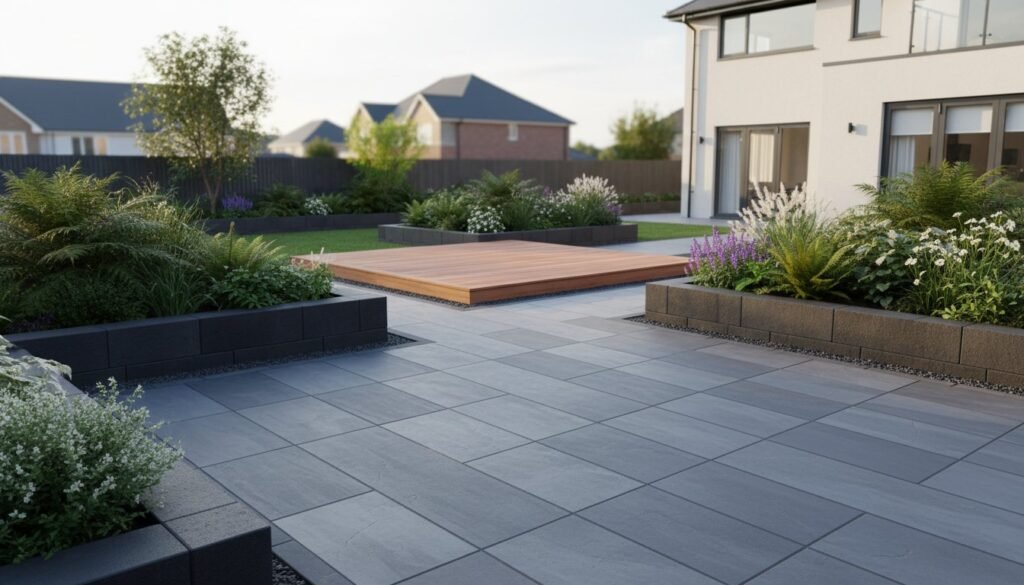
Planning to transform your garden but find yourself puzzled by the terminology? If you’ve ever heard words like ‘hardscaping’ and wondered how they fit into your vision for a perfect outdoor space, you’re not alone. It’s a common hurdle in the world of landscaping & gardening, where professional terms can feel overwhelming. But understanding these concepts is the first step towards creating a garden that is both beautiful and truly functional, forming the essential foundation for any successful design.
This straightforward guide is here to cut through the confusion. We’ll explain exactly what hardscaping is-the non-living, structural elements like patios, paths, walls, and decking that give your garden its shape and usability. You will discover its essential benefits, from creating practical, low-maintenance areas to adding year-round structure and value to your property. By the end, you’ll have the confidence and ideas needed to plan your project and create an outdoor space you’ll love for years to come.
Key Takeaways
- Understand the crucial difference between hardscaping (the non-living ‘bones’ like patios and walls) and softscaping (the plants) to plan a balanced garden design.
- Discover how common elements like patios, pathways, and retaining walls are used to solve practical garden problems and create more functional outdoor space.
- Investing in quality hardscaping provides long-term value by reducing maintenance, improving usability, and forming the durable foundation of your entire landscaping & gardening scheme.
- Learn the key questions to ask yourself before starting a project, from defining your budget to considering how you want to use the space for years to come.
Hardscaping vs. Softscaping: Understanding Your Garden’s Two Key Components
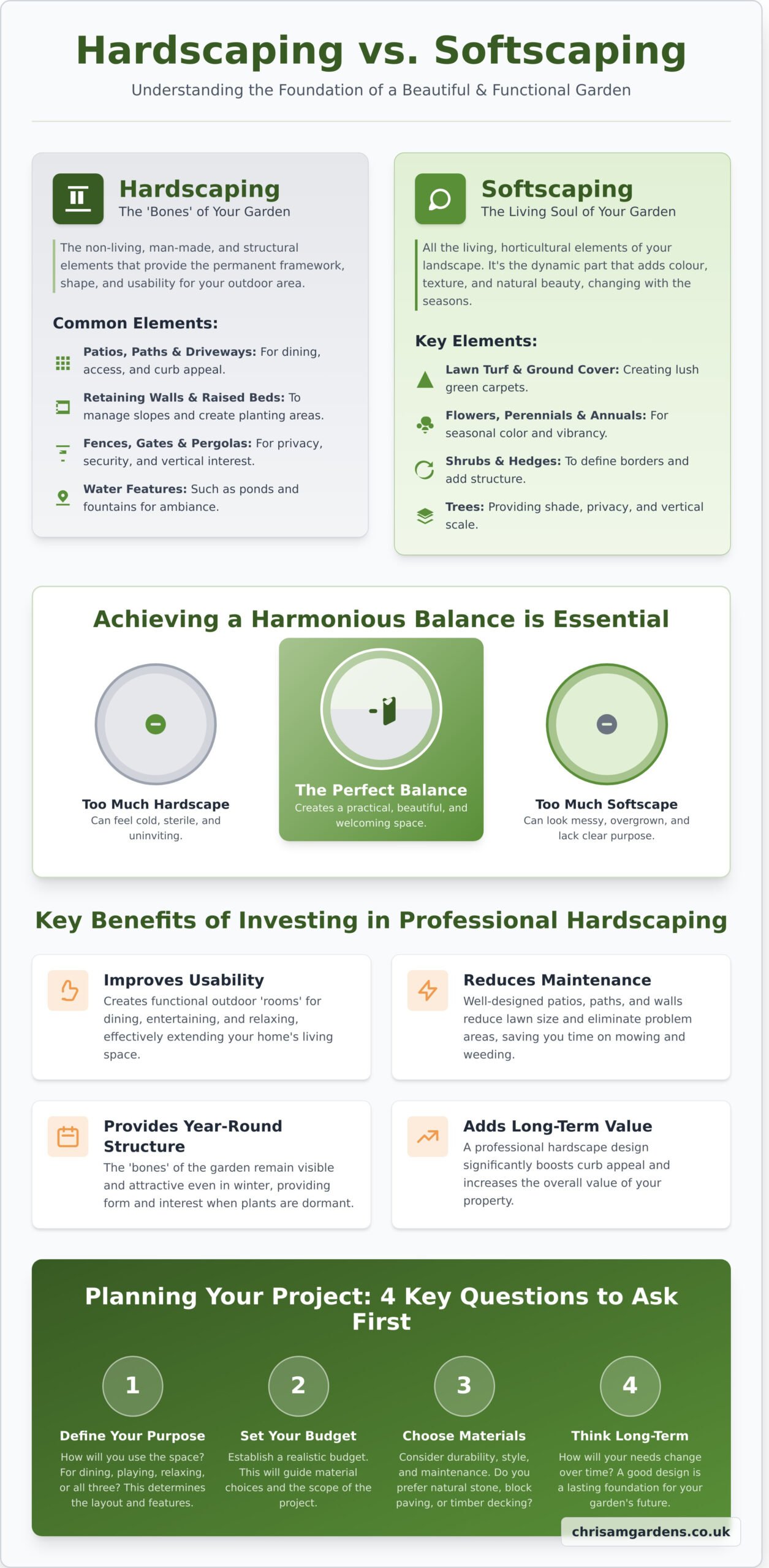
When planning any successful garden project, it’s helpful to think of your outdoor space as having two fundamental components: hardscaping and softscaping. A simple way to understand the difference is to compare it to building a house. The hardscape is the structure-the foundation, walls, and roof that provide permanent form and function. The softscape is everything you add to bring it to life, like the paint, furniture, and decorations.
Defining Hardscaping: The ‘Bones’ of Your Outdoor Space
So, what is hardscaping? In simple terms, it refers to all the non-living, man-made, and structural elements in your garden. These are the permanent fixtures that provide the essential framework for your outdoor area. Professional landscaping & gardening relies on these elements to create a functional and lasting design. Common examples of hardscaping include:
- Patios, paths, and driveways
- Retaining walls and raised beds
- Fences and gates
- Decks, pergolas, and arbours
- Water features like ponds and fountains
These features define the layout, guide movement, and add year-round structure to your property.
Defining Softscaping: The Living, Growing Elements
Softscaping, on the other hand, includes all the living, horticultural elements of your garden. It is the vibrant, growing part of your landscape that adds colour, texture, and life. Unlike the permanence of hardscaping, softscaping is dynamic, changing with the seasons and evolving over time. Its primary role is to soften the hard lines of structural features and bring natural beauty to the space. Key softscaping elements are:
- Lawn turf and ground cover
- Flowers, perennials, and annuals
- Shrubs and hedges
- Trees of all sizes
- Vegetable and herb patches
Why a Harmonious Balance is Essential
Achieving a beautiful and practical outdoor space depends on creating the right balance between these two components. A garden dominated by hardscaping can feel cold, sterile, and uninviting. Conversely, a space with only softscaping can often look messy, overgrown, and lack clear purpose. Quality landscaping & gardening uses hardscaping to create practical ‘rooms,’ define walkways, and establish flow. The softscaping then fills these areas, bringing them to life with colour, scent, and texture for a welcoming and complete environment.
The Most Common Hardscaping Elements and Their Purpose
While softscaping brings life and colour with plants, hardscaping provides the essential, permanent structure of your garden. These features are the backbone of professional landscaping & gardening, built to solve practical problems while adding lasting value and style. Expert suppliers like Marshalls offer a great overview of the most common hard landscaping elements, which form the foundation of any well-designed outdoor space. Let’s look at the key components and the practical benefits they deliver.
Patios, Driveways & Paths: The Foundation of Function
These features are the workhorses of your garden, providing a solid base for daily life. A well-laid patio creates a dedicated, low-maintenance area for outdoor dining and entertaining, extending your living space into the garden. A durable driveway not only provides practical, all-weather access to your home but also significantly boosts its kerb appeal. Finally, pathways guide movement, connecting different zones like the shed or a seating area and protecting your lawn from foot traffic. Popular, long-lasting materials include versatile block paving and elegant natural stone slabs.
Walls & Fencing: For Privacy, Security, and Structure
Walls and fences are crucial for defining your space and creating a sense of sanctuary. Fencing is the most common way to establish clear boundaries, offering essential privacy and security for your family. For gardens with a slope, a professionally built retaining wall is a functional necessity, preventing soil erosion and creating level terraces for planting or seating. Smaller, decorative walls can also be used to build attractive raised flower beds or to subtly segment a larger garden into distinct ‘rooms’. Quality materials like timber, traditional brick, and natural stone ensure these structures are both strong and stylish.
Decks, Pergolas & Gazebos: Adding Vertical Interest
To add dimension and character, vertical structures are an excellent choice. Decking offers a fantastic alternative to a traditional patio, particularly for sloped or uneven ground, creating a level, raised platform. A pergola creates a sense of enclosure over a path or seating area without blocking light, providing the perfect framework for beautiful climbing plants like wisteria or roses. For a more substantial feature, a gazebo provides a sheltered, shaded focal point-ideal for relaxation. These elements draw the eye upwards, making any landscaping & gardening project feel more dynamic and complete.
Key Benefits of Investing in Professional Hardscaping
Viewing professional hardscaping as a cost is a common mistake; it’s more accurately a long-term investment in your property and lifestyle. When planned and executed by a skilled team, hardscaping provides practical solutions and lasting value that far outweighs the initial outlay. It’s about transforming your outdoor area into a functional, beautiful, and low-maintenance asset that pays dividends for years to come.
Dramatically Reduce Garden Maintenance
One of the most significant benefits of quality hardscaping is reclaiming your weekends. A professionally installed patio or paved seating area instantly reduces the amount of lawn that needs mowing, feeding, and watering. Well-designed paths eliminate muddy tracks across the grass, while stylish gravel or stone sections offer a sophisticated, no-maintenance alternative to problematic turf. This strategic approach to landscaping & gardening means less time spent on weeding and upkeep, and more time simply enjoying your outdoor space.
Increase the Usability of Your Outdoor Space
Hardscaping turns an unpredictable patch of land into a reliable extension of your home. It creates defined, functional zones for any activity-a solid, level patio for dining furniture, a safe paved area for children’s play, or a secluded deck for relaxing. These durable surfaces make your garden accessible and usable in almost any weather, ensuring you can enjoy your investment year-round, not just on the sunniest days.
Boost Your Property’s Value and Kerb Appeal
First impressions are crucial, and nothing makes a stronger statement than a well-constructed driveway or an elegant stone pathway. High-quality patios, paths, and retaining walls are highly desirable features for potential buyers, signalling that a property has been well-cared-for and thoughtfully improved. Professional hardscaping adds quantifiable value, making it one of the smartest investments you can make in your home’s overall appeal and market price.
Solve Common Garden Problems
Beyond pure aesthetics, hardscaping provides robust, practical solutions to common garden challenges. The structural components, which form the core definition of hardscape, are powerful problem-solvers that can permanently fix frustrating issues. Common examples include:
- Managing Slopes: Retaining walls can tame difficult inclines, creating beautiful and functional level terraces.
- Poor Drainage: Properly installed permeable paving and drainage channels can prevent waterlogging and soggy lawns.
- Lack of Privacy: Fencing, walls, and raised beds create clear boundaries and effectively screen your space from neighbours.
Have a garden problem? See how our experts can help.
Planning Your Hardscaping Project: What to Consider First
Transforming your garden with hardscaping is an exciting prospect. Before laying the first stone, taking the time to plan properly ensures the final result is not only beautiful but also perfectly suited to your needs. A professional will always start with these questions, and thinking them through will prepare you for a productive consultation and a successful project.
Function and Lifestyle: How Will You Use the Space?
The first step is to define the purpose of your new outdoor area. A functional design is the foundation of all successful landscaping & gardening projects. Consider how your household will interact with the space daily. Answering these questions will help clarify your vision:
- Who will use it? Is it a family space for children and pets, a quiet retreat for adults, or a social hub for entertaining guests?
- What activities will happen here? Think about outdoor dining, sunbathing, children’s play, or simply creating a clear path from the back door to the shed.
- How will people move around? Good traffic flow is essential. Plan clear, logical pathways between key areas like the house, patio, and lawn.
- What are your priorities? Are you aiming for a low-maintenance design, maximum visual impact, or a practical, multi-purpose entertaining area?
Choosing the Right Materials for Your Style and Budget
Your choice of materials has a huge impact on the look, durability, and cost of your project. The key is to find a balance between aesthetics and practical considerations. In the UK, popular choices include natural stone (like sandstone or slate) which offers unique character, and concrete pavers, which provide uniformity and a wide range of styles. It’s crucial to select materials that complement the architectural style of your home for a cohesive look. We always recommend getting samples to see how they look in your garden’s natural light before making a final decision.
Budgeting: Understanding the Costs
A realistic budget is essential for any hardscaping work. The total cost is more than just the price of the paving slabs; it includes materials, professional labour, and, most importantly, the ground preparation. A common mistake is to cut corners on the sub-base and foundation to save money. However, this is the most critical part of the installation. A professionally prepared foundation prevents sinking, shifting, and drainage problems, ensuring your investment lasts for decades. Investing in quality workmanship from the start saves you from expensive repairs down the line. The best way to understand the full cost is with a detailed, transparent quote. Get your free quote today.
Build a Lasting Foundation for Your Perfect Garden
As we’ve explored, hardscaping is more than just patios and paths; it’s the essential framework that gives your UK garden structure, function, and year-round appeal. By thoughtfully balancing these permanent features with the softer elements of plants and lawns, you create a cohesive and practical outdoor space. This strategic approach is fundamental to successful landscaping & gardening, ensuring your investment enhances both your lifestyle and your property’s value.
Bringing that vision to life requires professional skill and meticulous care. At Chrisam Gardens Ltd, our experienced and skilled team in Milton Keynes is committed to delivering Quality Work, Honest Service, and Outstanding Results. We guarantee clean and respectful workmanship, transforming your garden with minimal disruption and maximum impact.
Ready to build the foundation of your dream garden? Contact Chrisam Gardens Ltd for a free consultation. Let’s create an attractive, practical outdoor space you’ll be proud of for years to come.
Frequently Asked Questions About Hardscaping
Do I need planning permission for hardscaping in the UK?
In most cases, you do not need planning permission for hardscaping projects like patios, paths, or driveways, as they fall under ‘permitted development rights’. However, there are exceptions. If you are laying a non-permeable surface over five square metres in your front garden, or building a raised deck or platform over 30cm high, permission may be required. We always recommend checking with your local council for specific guidance before starting any major work.
What is the most low-maintenance hardscaping material?
For a truly low-maintenance garden, porcelain paving is an excellent choice. It is non-porous, meaning it strongly resists staining, moss, and algae growth, and doesn’t require sealing. A simple wash is usually all that’s needed to keep it looking new. Composite decking is another fantastic option, as it won’t rot, warp, or splinter like traditional timber and never needs staining or sealing, offering a durable and practical solution for years to come.
How can hardscaping improve my garden’s drainage?
Professional hardscaping can significantly solve drainage problems. By installing permeable surfaces like gravel or specialist block paving, rainwater can soak directly into the ground, reducing surface runoff and waterlogging. Alternatively, for non-permeable surfaces like patios, a skilled installer will create a slight, calculated slope (a ‘fall’) that directs water away from your home and into a designated drainage channel or soakaway, protecting both your property and your lawn.
Can I do hardscaping projects myself or should I hire a professional?
While a simple gravel path can be a manageable DIY task, projects like patios, driveways, and retaining walls require professional skill for a safe and lasting result. The correct preparation of the sub-base is critical to prevent sinking, cracking, and drainage issues. For reliable and high-quality landscaping & gardening results that add value to your home, we always recommend hiring an experienced professional who guarantees their workmanship.
How does the UK climate affect the choice of hardscaping materials?
The UK’s damp climate and freeze-thaw cycles in winter make material choice essential. You must select frost-resistant paving, such as high-quality porcelain or certain natural stones, to prevent them from cracking. Non-slip surfaces are also a crucial safety feature for rainy conditions. Any timber used for decking or pergolas should be pressure-treated or a durable hardwood to resist rot and ensure it remains strong and attractive for years.
What’s the difference between a patio and a terrace?
The primary difference is elevation. A patio is a paved area that is built at ground level, often directly adjacent to a house. A terrace, by contrast, is a raised, level platform that is often built on a sloped section of a garden and is typically supported by a retaining wall. While both provide a functional, paved outdoor living space, a terrace is specifically designed to create usable flat ground where there was once a slope.