

Most british homeowners are surprised to learn just how quickly an overgrown garden can impact not only curb appeal but also property value. In Milton Keynes, where outdoor space is treasured, neglected gardens often become overwhelming projects. Professional garden clearance turns chaos into order, removing years of tangled growth and unwanted debris. Discover what steps go into this transformation and what to expect when skilled teams restore your outdoor retreat to a safe and inviting condition.
Table of Contents
- What Garden Clearance Means And Involves
- Types Of Garden Waste And Clearance Tasks
- Step-By-Step Garden Clearance Process
- Legal Duties And Environmental Standards In The UK
- Common Challenges And Cost Factors Explained
Key Takeaways
| Point | Details |
|---|---|
| Comprehensive Garden Clearance | Involves systematic removal of clutter, debris, and dead plant material to prepare for potential redesign. |
| Types of Garden Waste | Organic waste (e.g., leaves, branches) can be composted, while inorganic materials (e.g., plastics) require special handling. |
| Legal Responsibilities | Homeowners must comply with UK regulations regarding waste disposal, including obtaining waste transfer notes and ensuring eco-friendly practices. |
| Cost Factors | Influenced by garden size, waste complexity, and accessibility, requiring careful budget planning and assessment of potential challenges. |
What Garden Clearance Means and Involves
Garden clearance is a comprehensive process of transforming an overgrown, cluttered outdoor space into a clean, manageable landscape. Professional garden clearance involves systematic removal of unwanted materials, creating a fresh canvas for new garden design and landscaping opportunities. This essential service tackles accumulated debris, dead vegetation, and excess materials that have built up over time.
The process typically encompasses multiple stages of strategic outdoor space restoration. Garden clearance includes removing diverse elements such as old garden furniture, damaged fencing, overgrown decking, and natural waste like accumulated leaves, weeds, grass clippings, and invasive plant growth. Safe garden clearance requires careful planning and potentially professional assistance for complex or large-scale projects.
Key components of effective garden clearance involve:
- Comprehensive assessment of current garden condition
- Systematic debris and waste removal
- Clearing of dead or diseased plant material
- Preparation of ground for potential replanting or landscaping
- Waste management through responsible disposal or composting
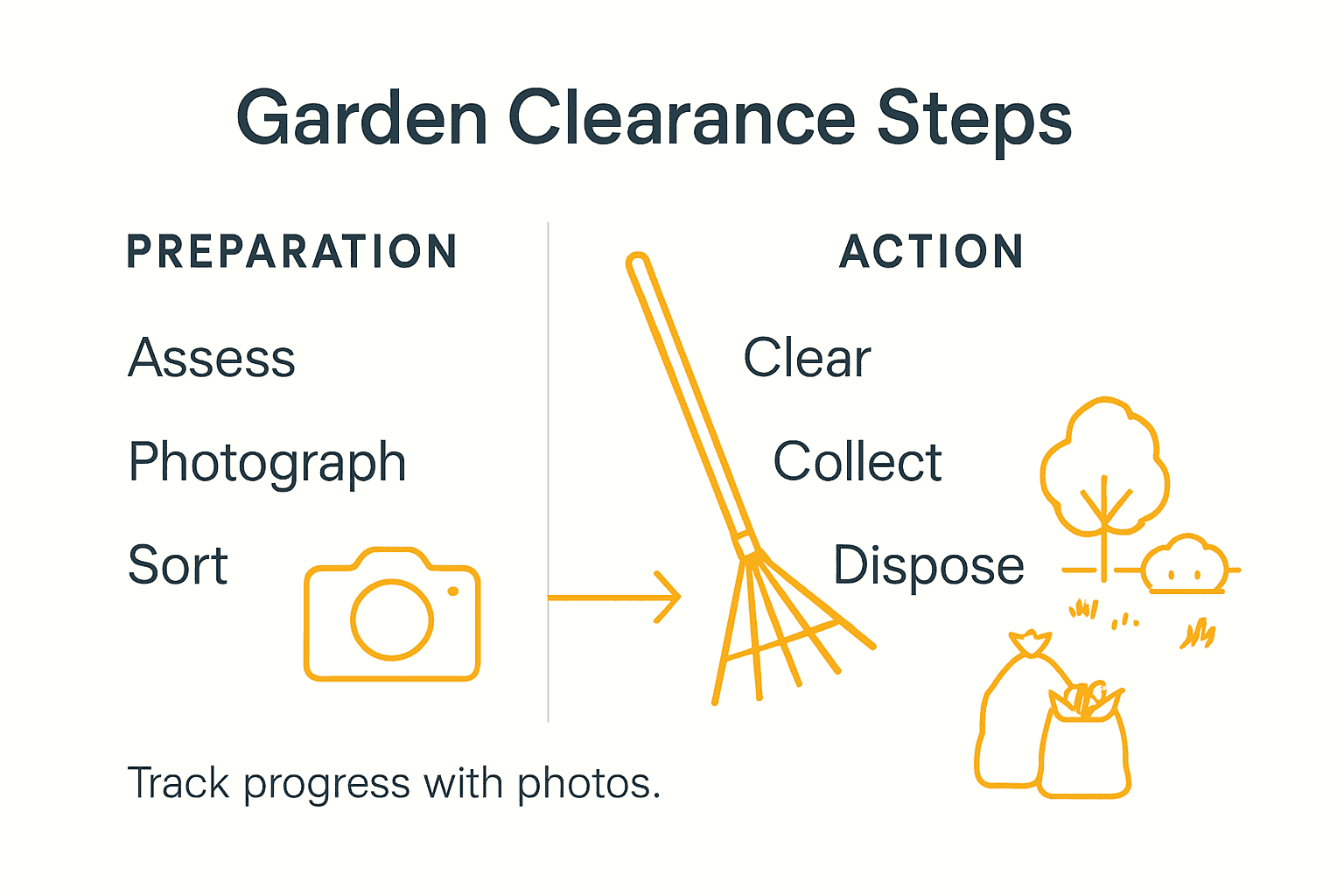
Pro tip: Before beginning garden clearance, take photographs of your current garden space to track transformation progress and help professional landscapers understand your starting point.
Types of Garden Waste and Clearance Tasks
Garden waste encompasses a diverse range of materials that require careful management and strategic disposal. Different types of garden waste demand specific handling and recycling approaches, reflecting the complexity of maintaining a clean and environmentally responsible outdoor space. Understanding these waste categories is crucial for effective garden clearance and sustainable landscape management.
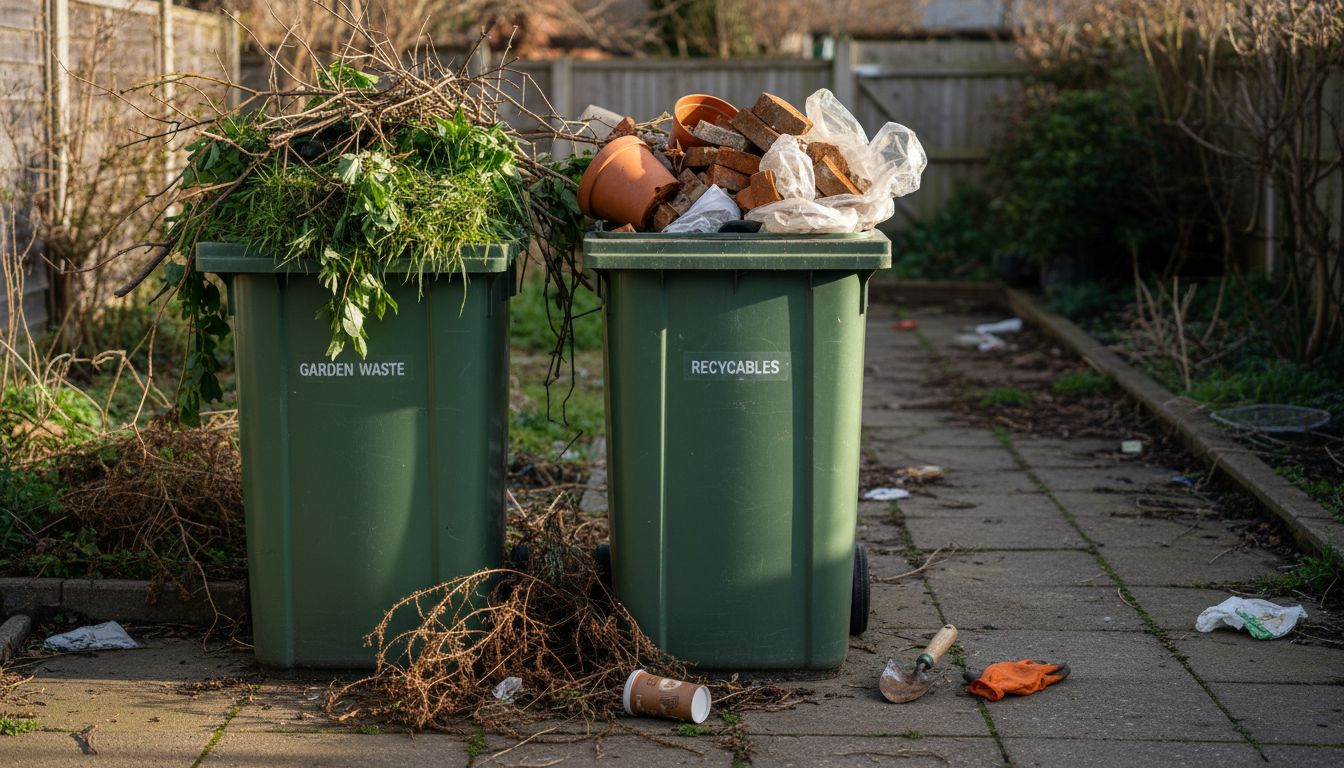
The primary categories of garden waste typically include organic and inorganic materials. Organic waste comprises grass cuttings, fallen leaves, branches, plant trimmings, and weeds – all of which can be transformed through composting or professional recycling methods. Inorganic waste presents a more complex challenge, involving the removal of old garden furniture, broken landscaping elements, and miscellaneous materials like plastics and metals.
Here’s a comparison of organic and inorganic garden waste management approaches:
| Waste Type | Typical Materials | Disposal Methods | Environmental Impact |
|---|---|---|---|
| Organic | Leaves, branches, weeds | Composting, recycling | Enhances soil, low impact |
| Inorganic | Plastics, metals, furniture | Special collection, recycling | Requires energy, pollution risk |
Specific garden clearance tasks involve:
- Pruning and removing dead or diseased plant material
- Clearing accumulated leaf and branch debris
- Extracting stubborn weeds and invasive plant species
- Disposing of broken garden infrastructure
- Sorting waste for appropriate recycling or disposal
Pro tip: Invest in separate collection containers for different waste types to streamline your garden clearance process and support more efficient recycling efforts.
Step-By-Step Garden Clearance Process
Professional garden clearance requires a systematic approach that transforms overgrown outdoor spaces into pristine landscapes. The process begins with a comprehensive initial assessment, where gardening professionals carefully evaluate the current condition of the garden, identifying areas requiring immediate attention and potential challenges that might complicate the clearance.
The clearance methodology typically follows a structured sequence of critical steps. Careful planning involves selecting appropriate tools, determining waste disposal methods, and scheduling the clearance during optimal seasons like early spring or late autumn. During the execution phase, professionals systematically remove unwanted vegetation, debris, and structural elements, ensuring thorough and methodical waste management.
Key steps in the garden clearance process include:
- Initial garden assessment and mapping
- Identifying and categorising different waste types
- Selecting appropriate removal tools and protective equipment
- Systematic debris and vegetation removal
- Sorting waste for recycling or disposal
- Final site cleaning and preparation for potential landscaping
Pro tip: Photograph your garden before and after clearance to track progress and help landscapers understand your vision for future garden development.
Legal Duties and Environmental Standards in the UK
Garden waste disposal in the United Kingdom is governed by stringent legal frameworks designed to protect environmental health and ensure responsible waste management. Homeowners and garden clearance professionals must navigate complex regulations that outline specific responsibilities for waste handling, transportation, and disposal.
Waste Management Regulations establish clear legal obligations for individuals and businesses involved in garden clearance. The Environmental Protection Act 1990 and Waste Regulations 2011 mandate comprehensive guidelines for responsible waste disposal, with significant emphasis on preventing environmental damage and maintaining public health standards.
Key legal requirements for garden waste management include:
- Obtaining waste transfer notes from licensed carriers
- Ensuring proper sorting and recycling of garden waste
- Preventing environmental contamination
- Adhering to specific regulations regarding waste burning
- Maintaining documentation of waste disposal
- Implementing eco-friendly disposal practices
Pro tip: Always request and retain waste transfer documentation from garden clearance services to ensure compliance with legal requirements and maintain a clear audit trail.
Common Challenges and Cost Factors Explained
Garden clearance costs involve multiple complex factors that significantly impact overall pricing and project complexity, requiring homeowners to carefully evaluate their specific landscape requirements and potential challenges. Understanding these variables helps prevent unexpected expenses and ensures more accurate budgeting for garden transformation projects.
The primary elements influencing garden clearance expenses include garden size, waste complexity, and site accessibility. Seasonal demand, unexpected landscape challenges, and the specific types of waste present can dramatically alter initial cost estimates. Hazardous materials, dense overgrowth, and difficult terrain typically increase labour time and disposal fees, making professional assessment crucial before commencing work.
Below is an overview of factors influencing garden clearance costs and their effect on overall pricing:
| Cost Factor | Influence on Pricing | Complexity Impact |
|---|---|---|
| Garden size | Larger areas increase labour | More time and resources needed |
| Waste diversity | Mixed types raise costs | Special handling may apply |
| Accessibility | Difficult access leads to higher fees | Equipment or extra crew often required |
| Hazardous waste | Extra disposal charges | Specialist treatment necessary |
| Seasonal demand | Prices vary by season | High demand raises cost |
Key cost factors to consider include:
- Garden dimensions and total area
- Complexity of vegetation and waste types
- Site accessibility and terrain challenges
- Volume of waste requiring removal
- Potential hazardous material disposal
- Seasonal pricing variations
- Labour intensity of the clearance project
Pro tip: Request detailed written quotes from multiple garden clearance services, ensuring they conduct an on-site assessment to provide the most accurate pricing.
Transform Your Outdoor Space with Expert Garden Clearance and Landscaping
Overcoming the challenge of cluttered, overgrown gardens requires professional expertise and careful planning. If you are facing the task of garden clearance – removing unwanted debris, managing diverse waste types, and preparing your outdoor space for a fresh start – trust the dedicated team at Chrisam Gardens Ltd to deliver clear, manageable results. From pruning and waste disposal to preparing the ground for future landscaping, we address every pain point highlighted in the article with reliability and care.
Whether your garden requires soft landscaping like turfing and planting or hard landscaping such as patios and fencing, Chrisam Gardens Ltd offers a comprehensive suite of services tailored to your needs. Take control of your garden transformation by choosing a trusted local expert with proven craftsmanship and personalised solutions. Explore how our garden clearance expertise can pave the way for your dream garden by visiting Chrisam Gardens Ltd.
Ready to reclaim your outdoor space and start your garden transformation today
Discover more about our full range of landscaping and garden clearance services at Chrisam Gardens Ltd and request your free quote now. Don’t wait for garden overgrowth or waste challenges to worsen. Take the first step towards a beautiful, clear, and inviting garden with a professional team who understands your needs.
Frequently Asked Questions
What is garden clearance?
Garden clearance is the process of transforming an overgrown or cluttered outdoor space into a clean and manageable landscape by systematically removing unwanted materials, debris, and dead vegetation.
What types of waste are involved in garden clearance?
Garden clearance typically involves two main types of waste: organic materials, such as grass cuttings, leaves, and branches, and inorganic materials like old garden furniture and broken landscaping elements.
What steps are followed in a garden clearance process?
The garden clearance process usually includes an assessment of the garden’s condition, identifying and categorising waste types, systematic removal of debris and vegetation, sorting waste for recycling or disposal, and final site cleaning in preparation for future landscaping.
What are the legal responsibilities regarding garden waste disposal?
Garden waste disposal is governed by regulations that require proper sorting, recycling, and obtaining waste transfer documentation. Homeowners must also ensure eco-friendly disposal practices and prevent environmental contamination.