
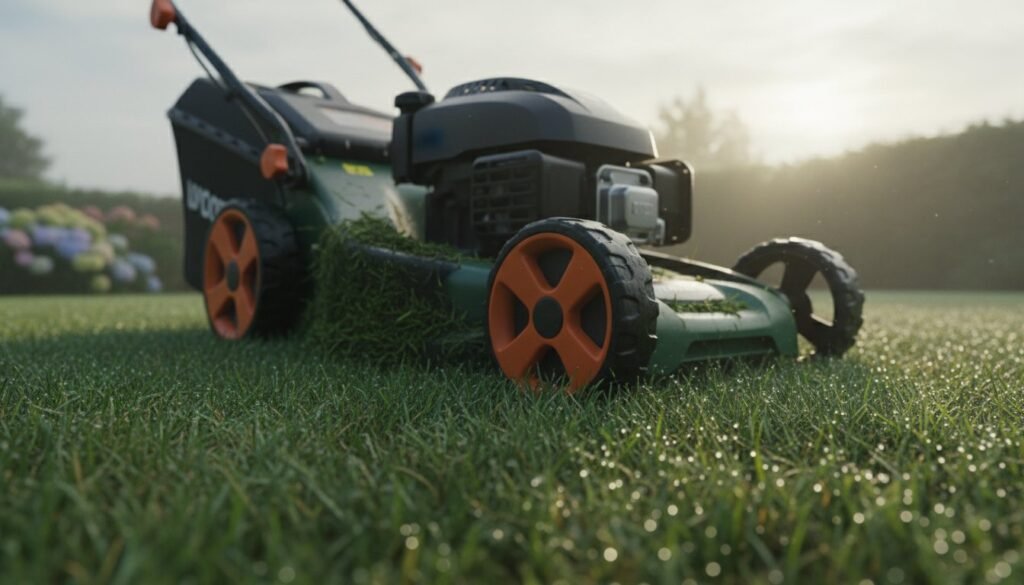
The British weather can be relentless. You look out at a garden in desperate need of a trim, but another downpour has left your lawn completely soaked. It’s a frustrating cycle that leaves many homeowners asking the same question: can you mow wet grass? You worry about damaging your expensive mower, creating ugly, clumpy patches, or even the safety of using an electric model on damp ground. It’s a common dilemma that can leave you feeling stuck between an overgrown lawn and the risk of making things worse.
As experienced landscaping professionals, our standard advice is simple: it’s always best to wait for dry conditions. However, we understand that isn’t always practical. In this straightforward guide, we will explain the real risks involved in mowing a wet lawn, covering the potential damage to both your turf and your equipment. Crucially, we will also provide our proven, step-by-step method for tackling the job safely when you have no other choice, giving you the confidence to manage your garden without causing long-term harm.
Key Takeaways
- While the answer to “can you mow wet grass” is strongly discouraged, understanding why it damages your lawn is the first step to better lawn care.
- Learn a simple field test to quickly determine if your lawn is just dewy or genuinely too saturated to be mown without causing damage.
- For situations where you absolutely must mow, follow our professional method to minimise risks to your safety, your mower, and your lawn’s health.
- Discover the crucial clean-up and recovery tasks required after mowing in damp conditions to prevent equipment rust and grass diseases.
The Short Answer: Why Professionals Advise Against Mowing Wet Grass
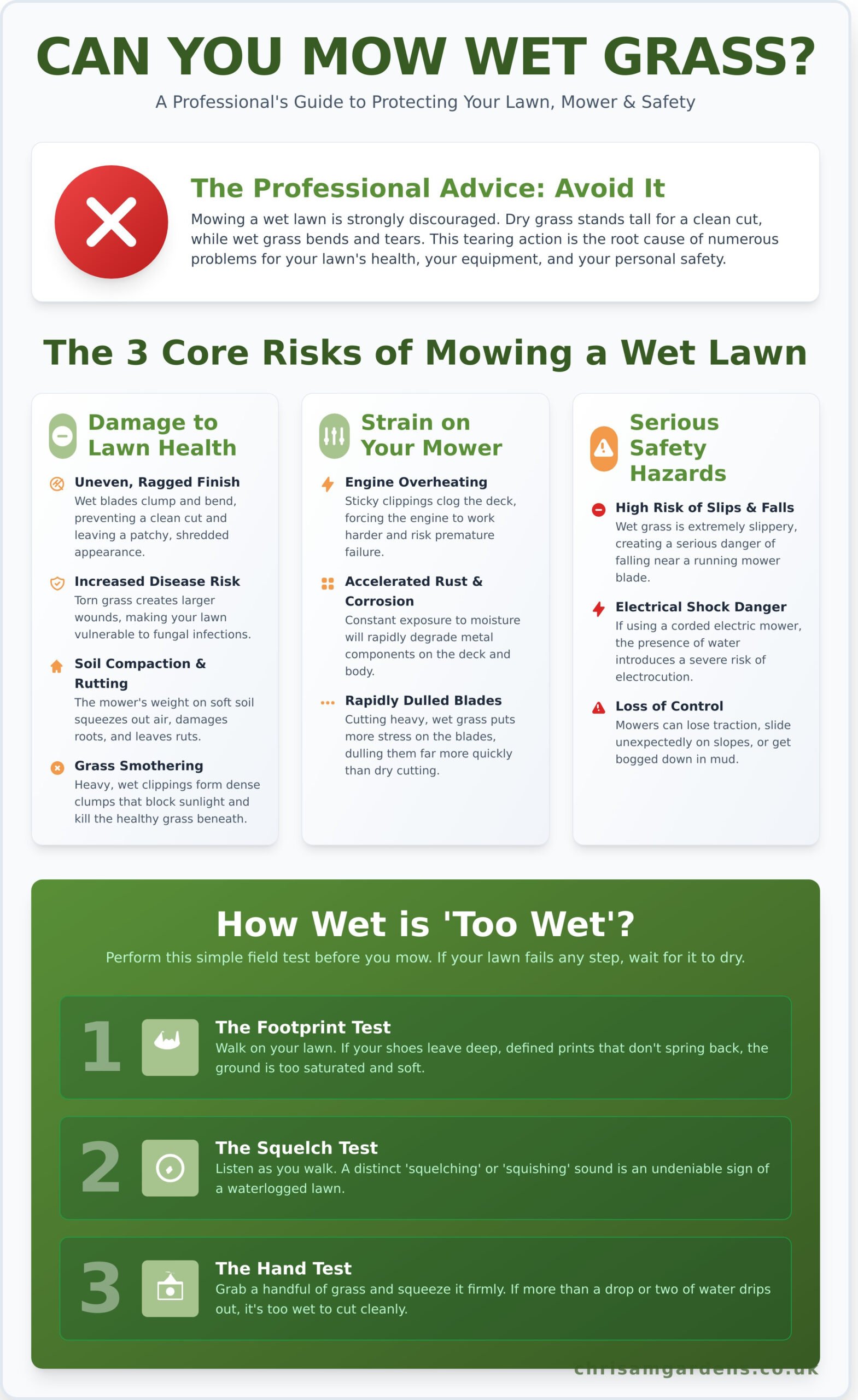
As professional landscapers, one of the most common questions we are asked is, “can you mow wet grass?” Our straightforward, professional advice is to avoid it whenever possible. The primary issue is simple: dry grass stands tall and cuts cleanly, while wet grass blades bend over and tear. This tearing action is the root cause of numerous problems for your lawn, your equipment, and your personal safety.
Attempting to mow a damp lawn introduces a range of risks that fall into three main categories. Understanding these will help you make the best decision for a healthy, attractive garden. We will cover the damage to your lawn’s health, the strain on your mower, and the serious safety hazards involved.
Damage to Your Lawn’s Health
A wet cut is rarely a quality cut. The moisture and weight cause grass blades to clump and bend, preventing the mower blade from slicing them evenly. This leads to several negative outcomes for your lawn:
- Uneven Finish: Instead of a clean, uniform cut, you’ll be left with a patchy, ragged appearance as some blades are missed entirely while others are shredded.
- Increased Disease Risk: Torn grass creates a larger wound than a clean cut, making your lawn more vulnerable to fungal infections and disease.
- Soil Compaction: Your mower’s weight on soft, saturated soil squeezes out vital air pockets around the roots, hindering nutrient and water absorption.
- Smothering: Heavy, wet clippings drop in dense clumps that block sunlight and air, suffocating and killing the healthy grass beneath.
Strain and Damage to Your Mower
Your lawn mower is an essential tool, and forcing it to work in wet conditions causes significant, avoidable wear. Wet grass clippings are heavy and sticky, quickly clogging the underside of the deck and blocking the blades from spinning freely. This forces the engine to work much harder, which can lead to overheating and premature failure. Furthermore, the constant exposure to moisture accelerates rust and corrosion on metal components and will dull your mower blades far more quickly than dry cutting.
Serious Safety Hazards for the Operator
Beyond the health of your lawn and equipment, your personal safety is the most critical reason to wait for dry conditions. Wet grass, especially on slopes or uneven ground, is extremely slippery and creates a high risk of slips and falls near a running blade. If you use a corded electric mower, the presence of water introduces a severe danger of electrical shock. Even with petrol or cordless models, the mower can lose traction, slide unexpectedly, or get bogged down, leading to a dangerous loss of control.
How Wet is ‘Too Wet’? A Simple 3-Step Field Test
In the UK, ‘wet grass’ can mean anything from a light morning dew to a lawn thoroughly soaked after a day of rain. Before you decide if can you mow wet grass, it’s crucial to make a professional judgement call on the level of saturation. A lawn that’s merely damp is very different from one that is waterlogged. Performing these simple, practical tests will give you a clear, reliable answer in minutes and help you protect the long-term health of your turf.
The Footprint Test
This is the quickest way to assess soil saturation. Simply walk a few steps onto your lawn and then step back to where you started. Look closely at the impressions your shoes have left. If you can see deep, defined footprints that don’t spring back, the ground is too soft. Mowing on saturated soil like this will compact the earth, damage the root system, and can leave unsightly ruts from the mower wheels.
The Squelch Test
Your ears can provide an excellent indication of excess water. As you walk across the lawn for the footprint test, listen carefully. If you hear a distinct ‘squelching’ or ‘squishing’ sound with each step, that’s an undeniable sign of a waterlogged lawn. This sound means the soil is oversaturated, and the weight of a heavy mower will only stress the grass and smear mud across your garden.
The Hand Test
While the first two tests check the soil, this one assesses the grass blades themselves. Reach down into a thick patch of your lawn and grab a handful of grass. Squeeze it firmly in your fist. If more than a drop or two of water drips out, the grass is too wet to cut cleanly. This moisture causes the blades to clump together, which leads to a messy, uneven cut and will quickly clog your mower deck. A clean cut is vital for lawn health, a point reinforced by Purdue University’s advice on mowing wet grass, which notes that tearing grass invites disease.
If your lawn fails any of these three tests, the answer is clear. It is best to give it more time to dry. Patience will be rewarded with a healthier, more attractive lawn and will prevent unnecessary damage to both your turf and your equipment.
If You Absolutely Must Mow: A Professional’s 7-Step Safety Method
As professionals, we will always advise you to wait for dry conditions. However, we understand that life doesn’t always offer ideal timing. Perhaps you have a property viewing or an end-of-tenancy deadline. If you find yourself in a situation where you absolutely must mow, this method is designed to minimise harm to your lawn, your mower, and yourself. Please treat this as a damage-limitation guide, not a recommendation.
Following these steps can help you manage the common issues that experts, including those at the Michigan State University Extension, warn about, such as soil compaction and mower stress. While the question of can you mow wet grass has a complex answer, this professional process offers the safest possible approach when you have no other choice.
- Ensure Your Blades Are Exceptionally Sharp. Dull blades tear grass, but on wet turf, this tearing is far more severe, leaving your lawn vulnerable to disease. A freshly sharpened blade will slice cleanly through the heavy, wet blades of grass, resulting in a healthier cut and less strain on your mower’s engine.
- Raise the Cutting Height. Set your mower deck to its highest possible setting. Trying to cut wet grass short is a recipe for disaster. A higher cut removes less grass, reducing the load on the mower and preventing the blades from getting bogged down in the saturated turf and soil.
- Clean the Mower’s Underside. Before you start, ensure the underside of the mower deck is clean and dry. Wet grass clippings are incredibly sticky and will immediately cling to any existing debris, leading to blockages, uneven cutting, and strain on the motor.
- Mow at a Slower Pace. Walk at about half your normal speed. This gives the mower blades more time to cut and discharge the heavy, wet clippings, preventing the machine from becoming overwhelmed and clogged. Rushing the job will only lead to poor results and potential damage.
- Make Narrower Passes. Instead of using the full width of your mower deck for each pass, overlap your previous pass by about 50%. While this means more walking, it significantly reduces the amount of grass the mower has to handle at any one time, ensuring a cleaner cut and protecting the engine.
- Manage Clippings Carefully. Never use the mulching function on wet grass; it will create a thick, suffocating paste on your lawn. Use a side discharge to disperse the clippings as best you can. If you are using a collection bag, empty it when it’s half full. Wet clippings are far heavier than dry ones and can quickly overload your mower.
- Rake Up Clumps Immediately. After you’ve finished, walk the lawn and rake up any clumps of wet clippings left behind. These dense mats will block sunlight, trap moisture, and can quickly kill the healthy grass underneath, leading to bare patches and disease.
After the Mow: Essential Clean-up and Lawn Recovery
Turning off the mower doesn’t mean the job is finished. In fact, what you do immediately after mowing wet grass is crucial for the long-term health of both your lawn and your equipment. This professional aftercare routine prevents lasting damage, ensures a tidy finish, and is a non-negotiable part of the process. Skipping these steps can lead to rust, lawn disease, and soil compaction, undoing all your hard work.
To ensure a healthy recovery, follow this straightforward checklist for post-mowing maintenance.
Immediate Mower Maintenance
Wet grass clippings are heavy, sticky, and corrosive. Cleaning your mower immediately is essential to protect your investment and ensure it performs reliably for years to come. A clean machine delivers a quality cut every time.
- Prioritise Safety: Before any cleaning, always disconnect the spark plug on a petrol mower or unplug the power source for an electric model. This prevents any chance of an accidental start-up.
- Scrape the Deck: Tip the mower safely and use a putty knife or scraper to remove all caked-on grass from the underside of the deck and around the blades. These clumps trap moisture and accelerate rust.
- Wipe and Dry: Use an old cloth to wipe down the entire machine, removing moisture from the body, wheels, and handles. A dry mower is a rust-free mower.
Lawn Care and Recovery
Your lawn is particularly vulnerable after being cut in damp conditions. The soil is soft, and the grass is stressed. Proper care at this stage helps it bounce back stronger and greener.
Use a light leaf rake or a flexible tine rake to gently break up any large, damp clumps of clippings left on the lawn. This simple action is vital because thick clumps can smother the healthy grass beneath, blocking sunlight and air, which often leads to yellow patches and fungal diseases. Afterwards, avoid walking on the lawn for at least 24 hours to allow the soil to firm up and prevent deep, lasting footprints and compaction.
When to Call for Professional Help
Even with careful technique, the answer to can you mow wet grass without any negative effects is often no. If you notice your lawn looks uneven, develops ruts, or shows signs of stress like yellowing or thinning patches, it may require professional intervention. These are common signs of soil compaction, where the wet ground has become dense and is suffocating the grass roots.
A professional lawn care service can diagnose the issue and provide effective treatments like core aeration to relieve compaction and restore proper air, water, and nutrient flow to the root zone. For expert lawn recovery in Milton Keynes, trust the experts at Chrisam Gardens Ltd. We have the skilled team and professional equipment to bring your lawn back to full health.
Smarter Alternatives to Mowing in Wet Weather
In the UK, waiting for a dry day to mow the lawn can feel like a real test of patience. When your grass is looking overgrown, the temptation to get the job done is strong. However, forcing the issue on a damp lawn often does more harm than good. Fortunately, there are several productive and practical alternatives to consider while you wait for better conditions.
The Best Alternative: Patience
The most professional advice is often the simplest: wait. Allowing your lawn to dry for a day or two is the best strategy for its long-term health. A robust, thriving lawn is far more valuable than one that is temporarily tidy but suffering from torn grass, soil compaction, and potential disease. The ideal time to mow is when the grass is completely dry on a cool day, which prevents the freshly cut blades from scorching in direct sunlight.
Focus on Other Garden Tasks
While you wait for the perfect mowing conditions, you can redirect your energy to other garden tasks that are perfectly suited to damp weather. This allows you to remain productive and improve your outdoor space without damaging the lawn. Good options include:
- Weeding your flowerbeds: Damp soil makes it much easier to pull up stubborn weeds, roots and all.
- Pruning shrubs and hedges: Trim back overgrown branches to improve their shape and health.
- Tool maintenance: Take the opportunity to clean, sharpen, and oil your garden tools in the shed or garage.
- Tidying hard surfaces: Clear fallen leaves or debris from paths and patios.
Schedule a Professional Maintenance Service
If your busy schedule means you’re constantly asking can you mow wet grass because you’ve missed the dry spells, a professional service is the most dependable solution. An experienced team can assess conditions accurately, using professional-grade equipment to achieve a clean cut at the optimal time. Regular, scheduled maintenance ensures your lawn never becomes unmanageable, removing the stress of trying to fit in a mow between rain showers.
Let our skilled team handle the hassle and keep your garden looking its best, whatever the weather. Explore our garden maintenance services to find a plan that works for you.
Mowing Wet Grass: A Professional’s Final Verdict
So, the final answer to the question ‘can you mow wet grass?’ is a cautious one. While technically possible when the ground is merely damp, it is a practice best avoided for the health of your lawn and the longevity of your mower. The key takeaways are clear: mowing a wet lawn leads to an uneven cut, increases the risk of turf disease, and clogs your equipment. For a truly professional finish, patience is paramount-a dry lawn is always the best canvas for a clean cut.
Navigating the unpredictable UK weather to find that perfect mowing window can be a constant challenge. If you’d rather entrust your garden to a team that guarantees outstanding results, Chrisam Gardens is ready to assist. As experienced and reliable landscapers trusted across the Milton Keynes area, we deliver quality workmanship every time. Get a free quote for professional garden maintenance in Milton Keynes and let our skilled team handle the hard work for you.
With the right professional care, your lawn can remain healthy, lush, and beautiful all year round.
Frequently Asked Questions About Mowing Wet Grass
Is it safe to mow wet grass with an electric mower?
We strongly advise against using an electric mower on wet grass. The combination of water and electricity poses a significant safety risk, including the potential for electric shock or short-circuiting the equipment. For your personal safety and the longevity of your mower, it is always best to wait until the lawn is completely dry. Professional landscapers will always prioritise safety and postpone a mow in wet conditions, and we recommend homeowners do the same.
Will mowing wet grass with a ride-on mower damage my lawn?
Yes, using a heavy ride-on mower on a saturated lawn can cause significant damage. The weight of the machine compacts the wet soil, which restricts air and water flow to the grass roots. This can lead to poor drainage and long-term lawn health issues. Furthermore, the wheels can easily create deep ruts and tear up the turf, leaving you with a muddy, uneven surface that is difficult to repair. It is always better to wait for drier conditions.
Can mowing a wet lawn actually kill the grass?
While a single wet mow is unlikely to kill a healthy, established lawn, it causes considerable stress and damage. Wet grass tears rather than cuts cleanly, leaving it vulnerable to fungal diseases like red thread. Heavy, wet clippings can also clump together, smothering the grass underneath and creating dead patches. Over time, repeated wet mowing will weaken your lawn significantly, making it far more susceptible to disease and pests, which can eventually kill sections of your turf.
How long should I wait to mow my lawn after it rains?
The ideal waiting time depends on the heaviness of the rainfall and your garden’s drainage. As a general rule in the UK, it is best to wait at least 24 to 48 hours. The goal is to ensure the top layer of soil is firm to the touch, not spongy, and that the grass blades themselves are dry. A simple test is to walk across the lawn; if your shoes get soaked or you leave deep footprints, it is still too wet to mow.
What is the difference between mowing damp grass and wet grass?
Wet grass is saturated from recent rain, with visible water on the blades and soggy soil underneath. Damp grass, typically from morning dew or light mist, has only minor surface moisture. While we always recommend mowing completely dry grass for the best results, mowing a lightly damp lawn is sometimes manageable. However, if you are asking ‘can you mow wet grass’ after a downpour, the answer is always no, as it presents far greater risks to your lawn and equipment.
Does mowing wet grass make the blades dull faster?
Yes, mowing wet grass will dull your mower blades much faster than cutting dry grass. The wet, heavy clippings create more resistance, forcing the blade and engine to work harder. More importantly, the moisture causes clippings and dirt to stick to the blades, forming an abrasive paste that grinds down the cutting edge. A dull blade tears grass instead of cutting it cleanly, which is why we always ensure our professional equipment is sharp and used only in proper conditions.