
Quick Summary
To maintain artificial turf, clear debris weekly, rinse the surface, and brush the fibres monthly to keep them upright. Check drainage and infill every three months, and treat pet urine with water and an enzyme-based cleaner rather than bleach or ammonia.
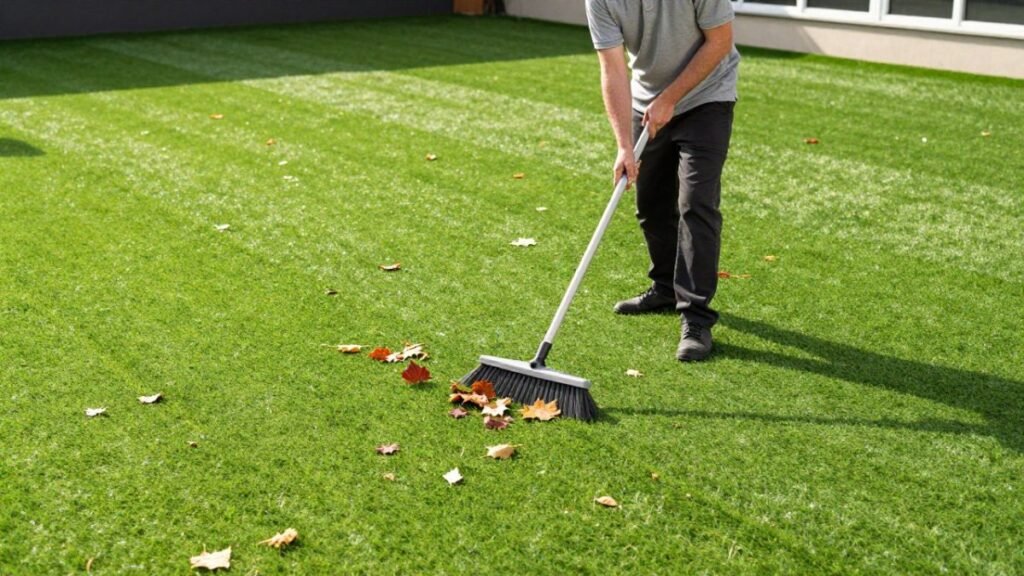
- Clear leaves, twigs and organic matter weekly with a plastic rake or a low-setting leaf blower.
- Brush the fibres monthly, working in one direction first, then across the grain.
- Avoid high-pressure jets on the infill, as they can wash it out and leave bare patches.
- Check drainage and infill depth every three months and top up where infill has thinned.
- Never use bleach, ammonia-based cleaners or harsh solvents, as they damage fibres and backing.
Table of Contents
- Last Updated: November 17, 2026
- Clearing Debris and Keeping the Surface Clean
- How to Brush Artificial Grass to Restore Its Upright Look
- How to Remove Pet Urine Smell From Artificial Grass
- Building Your Artificial Grass Maintenance Schedule
- Frequently Asked Questions
Last Updated: November 17, 2026
Last Updated: November 17, 2026
Clearing Debris and Keeping the Surface Clean
Artificial grass stays looking good with little work. Clearing leaves, twigs and organic matter weekly, with a plastic rake or a leaf blower on low, stops them breaking down into dirt.
Dust and pollen build up too, especially in spring. A quick, light rinse with a garden hose clears most of it without disturbing the infill.
Watch out: avoid using a high-pressure jet on the infill. Strong water pressure can wash it out from the edges and leave bare patches.
How to Brush Artificial Grass to Restore Its Upright Look
Foot traffic and heavy rain flatten the fibres. Brushing lifts them upright and keeps the lawn looking full.
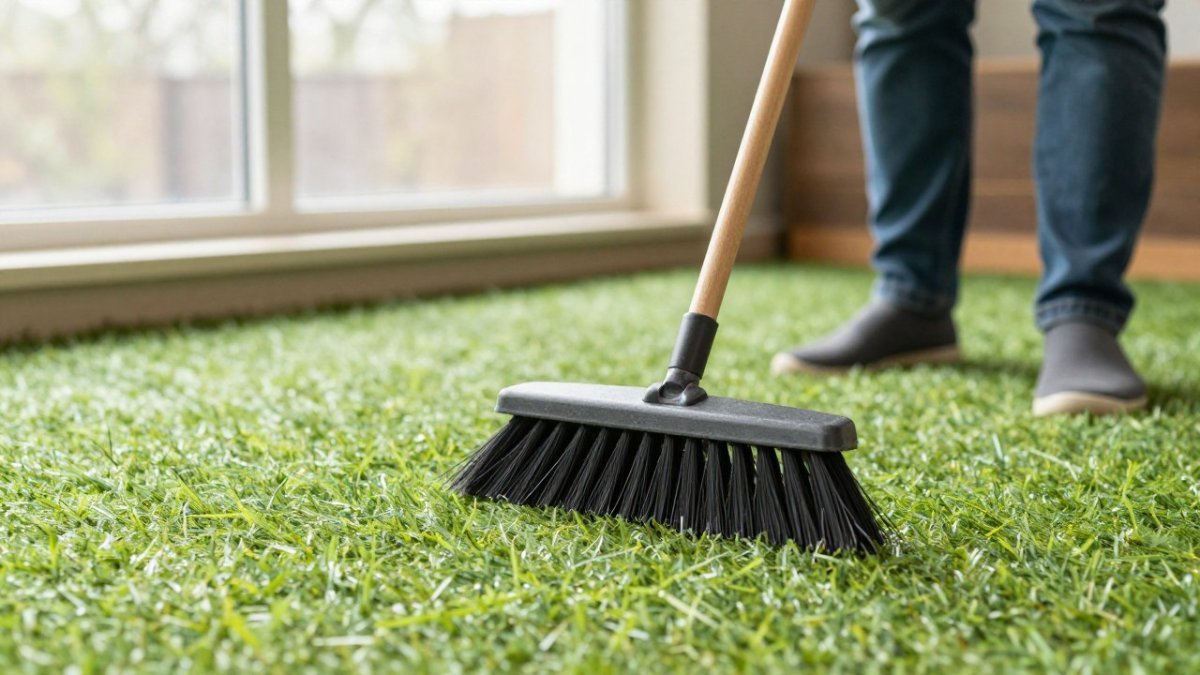
- Use a stiff broom or a brush made for synthetic turf
- Brush in one direction first, then across the grain
- Work through the whole area once a month, or more often in busy spots
Brushing also spreads infill evenly, which helps you maintain artificial turf and protects the backing underneath.
How to Remove Pet Urine Smell From Artificial Grass
A persistent smell usually points to a drainage or infill problem.
For a fresh accident:
- Rinse the spot with plenty of water straight away, working from the centre outwards
- Scrub with a mild soap solution and a stiff brush, then rinse again
- Lift solid waste with a bagged scoop and dispose of it in general waste, not compost
For a smell that keeps coming back, work through this diagnostic sequence:
- Check drainage first. Pour a bucket of water on the spot. If it stands for more than a few minutes, urine is sitting in the infill.
- Check infill depth. Brush it back to an even depth and top up if thinned.
- Rinse repeatedly, not heavily. Several light rinses over a few days clear more than one heavy soaking, which can wash infill to the edges.
- Use an enzyme-based cleaner designed for synthetic turf to break down the uric acid crystals soap alone cannot remove. Dilute per the manufacturer’s instructions, apply, leave for the stated contact time, then rinse thoroughly.
Products to avoid: never use bleach, ammonia-based cleaners or harsh solvents, as they can damage fibres, fade colour and degrade the backing. Avoid acidic descalers too. Test any uncertain product on an inconspicuous corner first and rinse well afterwards.
Prevention: train pets to use a designated area, rinse it weekly, and keep the surface free of organic matter that traps moisture. Check that the surface drains freely after rain and clear debris from the edges where water exits.
Building Your Artificial Grass Maintenance Schedule
A simple routine keeps the lawn in good shape, but frequency depends on use and weather. The table below is a baseline for a typical household lawn.
| Task | How Often | Time Needed |
|---|---|---|
| Clear debris and leaves | Weekly | 10 minutes |
| Rinse the surface | Weekly to fortnightly | 10 minutes |
| Brush the fibres | Monthly | 20 minutes |
| Spot clean spills and pet waste | As needed | 5 minutes |
| Check drainage and infill | Every three months | 15 minutes |
| Inspect seams, edges and flattened areas | Every three months | 10 minutes |
Time Needed
Adjust for usage level:
- Low traffic: baseline intervals are fine; brushing can drop to every six to eight weeks outside the growing season.
- Family lawn: brush high-traffic zones every two to three weeks, and rinse weekly in dry spells.
- Pets: rinse pet areas weekly, spot clean daily, and check drainage monthly.
- Rental or commercial use: treat as high traffic and inspect seams and edges monthly.
Seasonal care:
- Spring: clear winter debris and moss or algae, rinse the whole surface to lift pollen, and brush the fibres. Check infill depth and top up where it has settled.
- Summer: rinse more often in dry spells, avoid brushing in the heat of the day, and watch for standing water after storms, which signals a drainage issue.
- Autumn: clear leaves weekly, as wet leaves stain and block drainage. Brush after leaf fall to lift fibres and redistribute infill.
- Winter: avoid walking on the lawn during hard frost, when frozen fibres can snap. Clear snow with a plastic shovel, and never use salt or grit, which can damage the backing and contaminate the infill.
Infill care: check infill depth every three months by brushing a small area back and comparing it with the surrounding surface. If thinned, redistribute what is there and top up with the same infill type the lawn was installed with. Brushing against the grain works infill back into high-traffic zones. Once infill is evenly distributed, remove loose debris and rinse away residue as needed to keep the turf surface clean with Southern Artificial Turf.
Inspection and simple repairs: every three months, walk the perimeter and check seams and edges for lifting or gaps. Small lifted edges can often be re-seated and weighted while the adhesive cures; larger failures are best left to an installer. Flattened areas that do not recover after brushing may need the infill loosened and redistributed.
Garden maintenance can get busy, and it is fine to hand the upkeep to someone else. If you would rather not do the routine yourself, book a professional artificial grass installation to get the lawn laid correctly from the start. For a wider look at what the job involves, our guide to artificial grass in Milton Keynes covers costs and benefits. And if you need ongoing care, professional gardening and lawn care can keep the garden neat all year round.
Pricing depends on the size of the lawn, the work needed and the installation details, so contact Chrisam Gardens for a quote.
Keeping artificial grass looking its best takes a regular routine, and Chrisam Gardens can help you set one up. Get a Free Garden Quote Today.
Frequently Asked Questions
How often should you maintain artificial turf?
Light routine care such as clearing debris and rinsing is best done weekly, while brushing to lift flattened fibres every few weeks works well for most gardens. Heavily used areas, such as a family play zone or a space with a dog, may need more frequent attention. Infill should be checked and redistributed periodically to keep the surface even and safe. Setting a simple calendar reminder makes it far easier to keep the turf looking good all year round.
Can you use washing-up liquid on artificial turf?
A small amount of mild washing-up liquid diluted in warm water is generally suitable for spot cleaning artificial grass. Use a soft brush or cloth, avoid harsh detergents, bleach or strong solvents, and rinse the area thoroughly with clean water afterwards. Test any cleaning solution on a hidden patch first to confirm it does not discolour the fibres or affect the backing. Always check the manufacturer’s care guidance before using a product that is not recommended for synthetic surfaces.
What is the best way to remove pet urine smell from artificial grass?
Rinse the affected area with plenty of water as soon as possible, then wipe it with a mild cleaning solution made for pet odours. Water helps flush urine down through the backing and into the drainage layer, which reduces the smell. Keeping the infill clean and free of build-up also helps prevent odours from lingering. Regular rinsing of the whole lawn is the most effective way to stop odours from returning.
