
Last Updated: November 8, 2026
Quick Summary
Garden fencing lasts longest when you protect the base from moisture, treat the timber on a regular schedule, and inspect it every six months. Most fences fail from rot at ground level rather than from wear on the panels themselves. Clearing soil and debris from the base and treating only dry timber will extend its life.
- Most fences fail early because of rot at the base, not panel wear.
- Clear soil, leaves and weeds from the base so air can reach the timber.
- Never seal timber that is still wet, since trapped water speeds up rot.
- Inspect the fence every six months and treat it every one to two years.
- Replace posts and panels together when rot has gone through the posts.
Table of Contents
- Protecting Garden Fencing From Rot and Moisture Damage
- Treating and Maintaining Garden Fencing Through the Seasons
- Checking Fence Age and Condition Before Problems Spread
- Frequently Asked Questions
Garden fencing that lasts is mostly down to three things: the material you start with, how you protect it from moisture, and how often you check it. Most fences in the UK fail early because of rot at the base, not because the panels themselves wear out. The same few habits make the biggest difference to how long a fence stays straight and sound. Because moisture at the base is such a common cause of early failure, regular checks and prompt repairs matter even more in damp conditions, a point worth keeping in mind with ETX Fencing.
This guide walks through what to do, step by step, so your fence stays solid for years rather than months.
Protecting Garden Fencing From Rot and Moisture Damage
Rot is the main reason garden fences fail. Water sits at the base of posts and panels, soaks into the timber, and slowly softens it from the bottom up.
- Check the ground contact points. Look at the bottom of each post and the lowest part of each panel.
- Keep soil and debris away. Clear soil, leaves and weeds from the base so air can reach the timber.
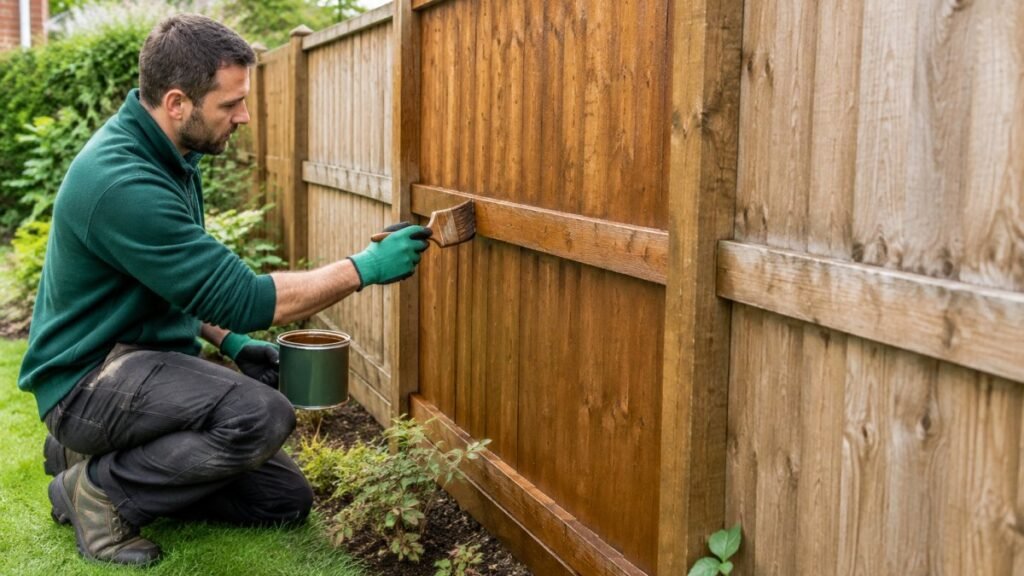
- Apply a wood preserver. Use a product labelled for external timber and reapply as the label says.
- Let timber dry before treating. Painting or staining damp wood traps moisture inside.
Watch out: never seal timber that is still wet. Trapped water speeds up rot faster than leaving the wood bare.
BRE guidance on timber durability and decay
If your fence is already rotting or damaged, you may want a local installer or repair service to fix it properly. Fence installation and repair in Milton Keynes and Bedford can handle the job when DIY is no longer enough.
Treating and Maintaining Garden Fencing Through the Seasons
A fence needs a simple routine, not constant attention. Plan the work around the seasons.
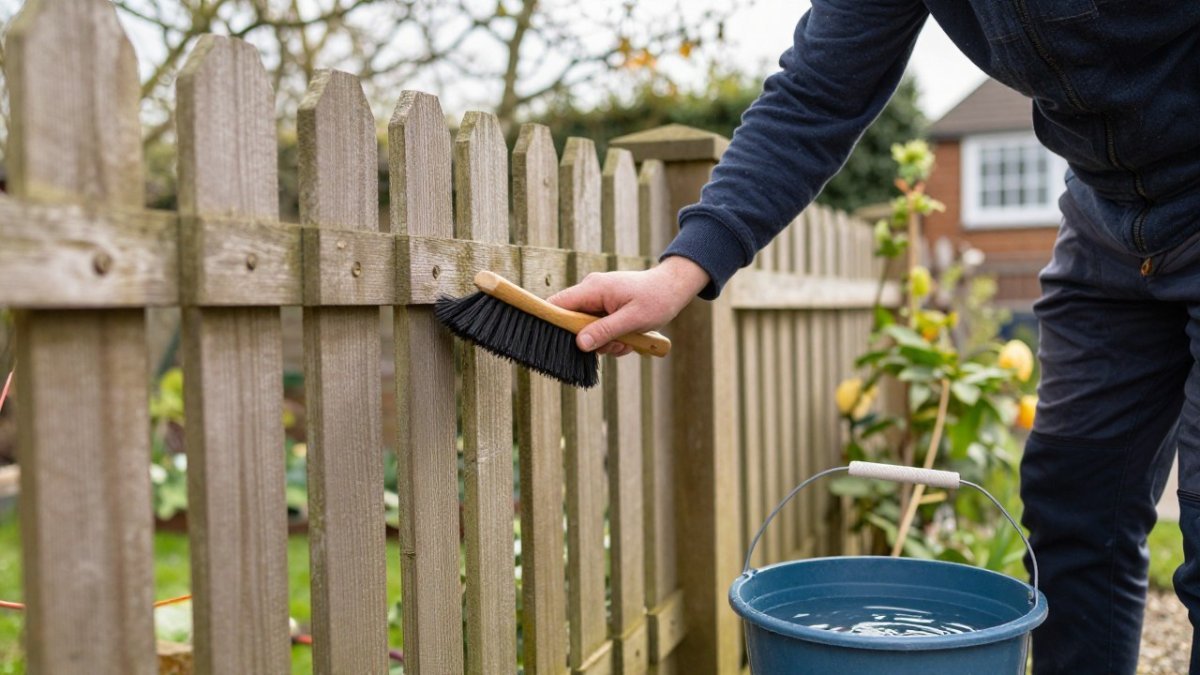
- Spring: Clean the panels with a soft brush and water. Remove algae and green growth that holds moisture.
- Summer: Look for loose fixings and tighten screws or nails.
- Autumn: Clear leaves and soil from the base. Check for soft or dark timber.
- Winter: Avoid treating timber in frost or wet weather. Check for leaning posts after storms.
A good rule is to inspect the fence every six months and treat it every one to two years, depending on exposure. Fences in shade or near hedges stay damp longer and need more frequent attention.
If you are planning seasonal upkeep or upgrades, complete guide to garden fencing materials and styles compares durable options for different gardens.
The seasonal routine below sums up when each maintenance task should be done.
| Season | Task | Frequency |
|---|---|---|
| Spring | Clean panels with soft brush and water | Yearly |
| Summer | Tighten loose screws or nails | Check regularly |
| Autumn | Clear leaves and soil from base | Seasonal |
| Winter | Avoid treating in frost or wet weather | Seasonal |
| All year | Inspect fence | Every six months |
| All year | Treat timber | Every one to two years |
Checking Fence Age and Condition Before Problems Spread
Catching a problem early is far cheaper than replacing a whole run. Look for these warning signs:
- Posts that wobble when pushed
- Panels that sag or lean
- Soft, spongy or crumbling wood
- Dark stains or fungal growth at the base
- Gaps where fixings have worked loose
A fence that is old and widely damaged often costs more to repair than to replace. If the posts are rotten through, repairing the panels will not hold. In that case, replacing the posts and panels together gives you a fence that lasts. Fence installation options cover replacement when a repair is no longer worth it.
Watch out: do not push or lean on a failing fence to test it. A panel that gives way can cause injury, so check from a distance or call a professional.
UK government advice on maintaining boundary fences
A simple plan works best: protect the base, treat on a schedule, and check the condition every six months. If you want a professional to assess your fence, you can request a quote through the Chrisam Gardens website.
Frequently Asked Questions
How long should a garden fence last?
Timber garden fences typically last around 10 to 15 years, and well-maintained pressure-treated fence posts can last up to 25 years, depending on the timber, the preservative used and exposure to weather. Panels usually wear out before posts, so checking both regularly tells you which part needs attention. Lifespan drops quickly where fencing sits in damp soil, under dense hedges or in shaded, wet corners of the garden. Keeping the base clear of soil and debris helps the panels last longer.
How often should I treat garden fence panels?
Most timber fence panels benefit from a fresh coat of wood preserver or stain every two to three years, though the exact interval depends on the product and the exposure of the fence. Check the finish each spring and autumn; if water no longer beads on the surface, or the timber looks grey and dry, it is time to recoat. Clean the surface and let it dry fully before applying any treatment. Always follow the manufacturer’s instructions for coverage and drying time.
How can I tell when a garden fence needs replacing?
Replacement is usually worth considering when posts are soft or crumbling at ground level, when several panels are split or rotten, or when the fence leans and cannot be straightened by re-setting the posts. Loose fixings that keep coming back, and gaps caused by warped boards, are also signs of wear. If repairs are needed on most of the run, replacing the whole section is often more practical than patching it piece by piece.
