
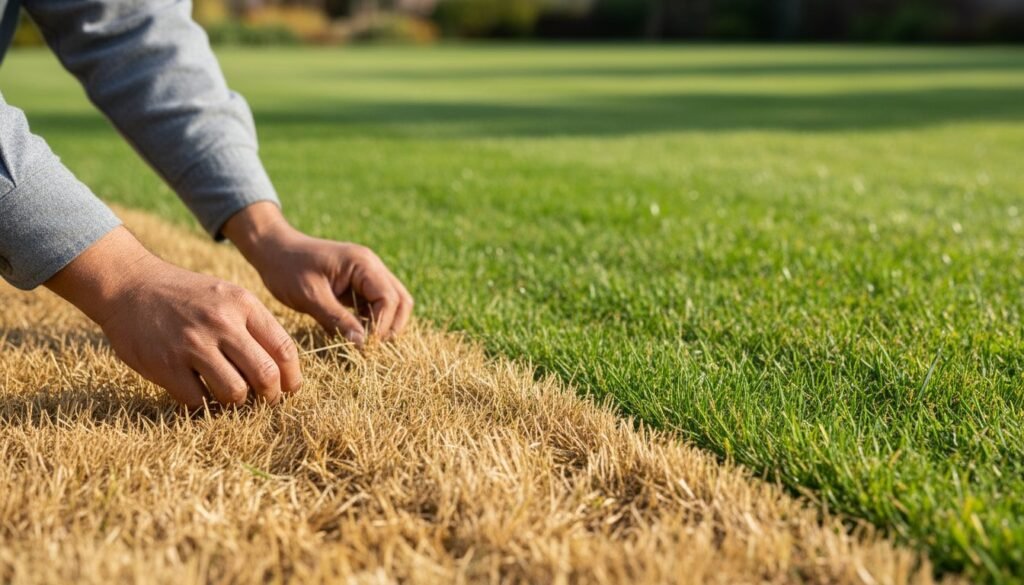
It’s a frustrating sight for any homeowner: you look out at your garden, only to see patches of yellow spoiling an otherwise green lawn. When your grass turns yellow, it’s a clear sign that something is wrong, but diagnosing the issue can feel overwhelming. You might worry that any action you take could make the problem worse, or lead to expensive, complicated treatments that don’t deliver the results you want.
This professional guide is designed to remove the guesswork. We will walk you through the most common reasons for a yellowing lawn right here in the UK-from nutrient deficiencies and improper watering to common pests and lawn diseases. You will learn simple, effective steps to correctly identify the cause and, most importantly, discover the practical solutions to restore its lush, green health. Get ready to transform your lawn from a source of concern into a feature you can be proud of.
The ‘Big Three’ Culprits: Water, Nutrients, and Mowing Habits
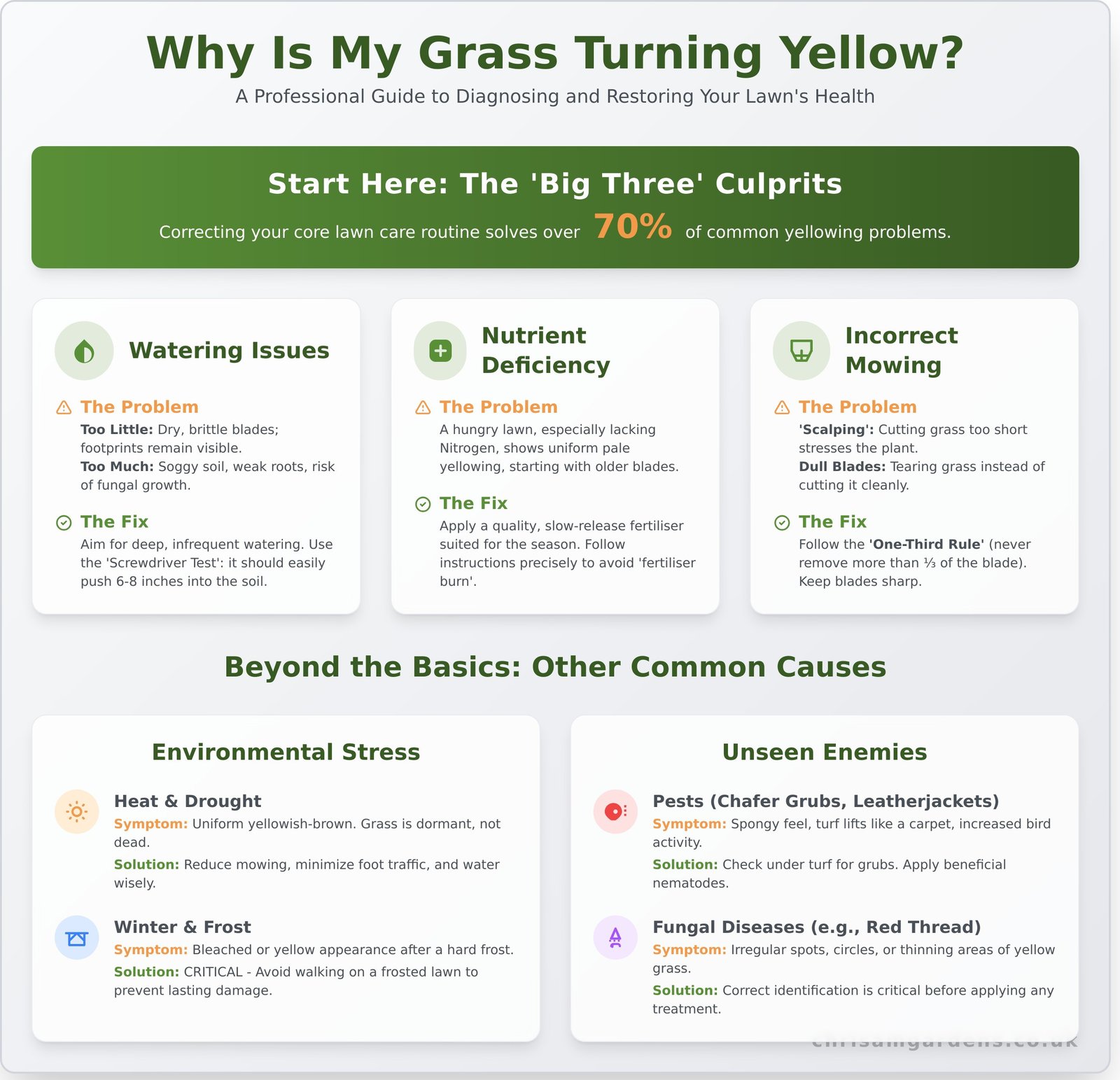
When your grass turns yellow, the cause is often simpler than you think. Before investigating complex issues like pests or diseases, your diagnosis should always start with your core lawn care routine. In our professional experience, getting the fundamentals of watering, feeding, and mowing correct solves over 70% of common lawn problems. Best of all, these issues are usually the most straightforward and cost-effective to fix. A key part of understanding lawn fundamentals is mastering these three pillars of lawn health.
Use this simple checklist to start your diagnosis:
- Water: Is the soil too dry or constantly soggy?
- Nutrients: Has the lawn been fed with a suitable fertiliser in the last 3 months?
- Mowing: Is the mower blade set too low, and is it sharp?
Watering Issues: Too Much or Too Little?
Improper watering is a primary reason grass turns yellow. Signs of underwatering include dry, brittle blades and footprints that remain visible long after you’ve walked on the lawn. Conversely, overwatering leads to soggy soil, weak roots, and can encourage fungal growth. For a healthy lawn, aim for deep, infrequent watering. This encourages roots to grow deeper and stronger. A great way to check moisture is the ‘screwdriver test’-if you can’t easily push a standard screwdriver 6-8 inches into the soil, it’s time to water.
Nutrient Deficiency: Is Your Lawn Hungry?
Grass requires a balanced diet to maintain its vibrant green colour, with Nitrogen being the most critical nutrient. A common symptom of a deficiency is a uniform, pale yellowing across the lawn, often starting with the older grass blades. To fix this, apply a quality, slow-release fertiliser suited for the current season. It is vital to follow the application instructions precisely to provide the right amount of food and avoid ‘fertiliser burn’, which can cause severe brown and yellow patches.
Incorrect Mowing: Are You Cutting Too Short?
Cutting your grass too short, a practice known as ‘scalping’, puts immense stress on the plant and is a major cause of yellowing. It robs the blade of its ability to photosynthesise effectively. Always follow the ‘one-third rule’: never remove more than one-third of the blade’s height in a single mow. We recommend raising your mower blade height, especially during hot, dry UK summers, to help the grass retain moisture. Finally, ensure your mower blades are sharp; dull blades tear the grass, leaving ragged, yellowing tips and increasing the risk of disease.
Environmental Stress: How Weather and Seasons Affect Your Lawn
Sometimes, the reason your grass turns yellow has less to do with your maintenance routine and more to do with the unpredictable UK weather. From summer heatwaves to winter frosts, your lawn is constantly adapting to environmental stress. The good news is that much of this discolouration is a natural, temporary survival response that a healthy lawn can overcome with professional care and a little patience.
Heat and Drought Stress
During prolonged periods of heat and low rainfall, you may notice your lawn turning a uniform yellowish-brown. This is a natural defence mechanism. The grass isn’t dead; it has simply entered a dormant state to conserve water and energy. An established, healthy lawn can survive in this state for several weeks and will green up again once cooler, wetter weather returns. However, a lawn weakened by drought is also more vulnerable to opportunistic fungal diseases, such as Ascochyta leaf blight, which can cause further discolouration.
Here are a few practical tips to help your lawn cope during a drought:
- Reduce Mowing: Raise your mower’s cutting height or stop mowing altogether to reduce stress on the grass.
- Minimise Foot Traffic: Dormant grass blades are brittle and easily damaged. Avoid walking on the lawn until it recovers.
- Water Wisely: If hosepipe bans aren’t in effect, water deeply but infrequently (once a week) early in the morning to minimise evaporation.
Winter Dormancy and Frost
Just as summer heat causes stress, so does winter cold. Most cool-season grasses common in the UK will naturally lose some of their deep green colour as they go dormant for the winter. This is perfectly normal. Furthermore, a hard frost can damage the grass blades, leaving them with a bleached or yellow appearance. The most important rule for winter lawn care is to avoid walking on a frosted lawn. The frozen grass blades are extremely fragile, and the pressure from your footsteps can crush them, causing lasting damage that will be visible as yellow or brown patches in the spring.
Rest assured, as temperatures rise and daylight hours increase, your lawn will naturally begin to grow and regain its lush green colour. A professional spring lawn treatment can help accelerate this process and ensure a strong start to the growing season.
Unseen Enemies: Identifying Pests and Lawn Diseases
If you’ve addressed watering, feeding, and mowing, but your lawn still has yellow patches, it’s time to investigate unseen culprits. Pests and fungal diseases can cause significant damage, often appearing as irregular spots, circles, or thinning areas rather than a uniform discolouration. While there are many common reasons your grass is turning yellow, these biological issues require a closer look. Correctly identifying the problem is the most critical step before applying any treatment, as the wrong product can be ineffective or even harm your lawn further.
Common Lawn Pests in the UK
In the UK, the most common culprits living just below the surface are leatherjackets (crane fly larvae) and chafer grubs. These pests feed on grass roots, causing the turf to weaken and die. A tell-tale sign is when your grass feels spongy underfoot or lifts away from the soil like a carpet. You may also notice increased bird activity as they dig for the grubs. To check, simply cut a small flap of turf on three sides and peel it back. If you see small, white, c-shaped grubs or greyish-brown larvae, you’ve found the source. Effective treatment often involves applying beneficial nematodes at the right time of year, a targeted biological control that is safe for your lawn and wildlife.
Fungal Diseases like Red Thread
Fungal diseases are another frequent cause of yellowing grass, especially in damp conditions. Red Thread is one of the most common, identifiable by pinkish-red, thread-like strands that bind the grass blades together. It is often a sign of low nitrogen in the soil and is more of a cosmetic issue than a fatal one. To manage it:
- Improve air circulation by scarifying and aerating your lawn.
- Apply a balanced fertiliser to correct the nitrogen deficiency.
- Rake out dead patches and collect your grass clippings when mowing to prevent it from spreading.
Keep an eye out for other diseases like Fusarium Patch (Snow Mould), which appears as yellowish-brown patches in autumn and winter.
When to Call a Professional
While minor pest or disease issues can often be managed with DIY treatments, a widespread infestation can be difficult to eradicate without professional help. A skilled lawn care expert can provide an accurate diagnosis and recommend the most effective, safe treatment plan. If the damage is severe and your grass turns yellow and dies in large areas, treatment may not be enough. In these cases, the most reliable and efficient solution is starting fresh with new turf. For severe lawn damage, ask us about professional re-turfing services to restore a lush, healthy lawn.
Localised Issues: Solving Yellow Patches and Spots
When your lawn isn’t yellow all over but shows distinct patches and spots, the problem is usually localised. These isolated areas are a clear signal of a specific issue that requires a targeted solution. Identifying the cause is the first step towards effective treatment and restoring your lawn’s uniform, green appearance.
Pet Urine Damage
Dog urine contains a high concentration of nitrogen, which can scorch the grass blades, much like an overdose of fertiliser. This often creates a distinctive ‘bullseye’ pattern: a dead, yellow or brown centre where the urine was most concentrated, surrounded by a lush, dark green ring where the diluted nitrogen acted as a stimulant.
To manage this, you should:
- Water the area thoroughly and immediately after your pet urinates to dilute the nitrogen.
- Train your dog to use a specific, less visible area of the garden.
- For existing damage, use a quality lawn repair kit to reseed the small, affected patch.
Fertiliser Burn and Chemical Spills
Accidents happen, but spilling concentrated fertiliser, weed killer, or other garden chemicals can quickly burn the grass, leaving behind stark yellow or brown patches. Over-applying granular fertiliser can have the same scorching effect. To prevent this, always use a calibrated spreader for even application and fill it on a hard surface like a patio, where any spills can be easily swept up. If a spill does occur, water the area heavily to dilute the chemical and flush it through the soil. Severely burned areas may not recover and will likely need to be raked out and reseeded.
Soil Compaction
Areas of your lawn that see heavy foot traffic, such as paths to the shed or children’s play areas, can suffer from soil compaction. When soil becomes compressed, it restricts the flow of air, water, and nutrients to the grass roots, essentially starving them. If you notice the ground feels hard, water pools on the surface, and the grass turns yellow and thin in these high-traffic zones, compaction is the likely culprit. The most effective solution is aeration. For small areas, you can use a garden fork to create deep holes. For larger lawns, a mechanical aerator provides the best results. This process is best carried out in spring or autumn to give your lawn the best chance of recovery.
Identifying and treating these localised problems is key to maintaining a beautiful, consistent lawn. If you need professional assistance with aeration or lawn restoration, contact the experienced team at Chrisam Gardens for reliable service.
Achieve the Lush, Green Lawn You Deserve
A yellowing lawn can be frustrating, but as we’ve explored, the cause is often manageable. Whether it’s improper watering, a lack of essential nutrients, or even the wrong mowing height, understanding why your grass turns yellow is the first crucial step toward reviving it. By addressing these core issues, from pests to soil compaction, you can guide your lawn back to vibrant health.
However, diagnosing the exact problem takes time and professional expertise. If you prefer a guaranteed solution, the experienced team at Chrisam Gardens is here to help. As specialists in turfing and new lawn installation, we are trusted by homeowners across Milton Keynes to deliver quality work and outstanding results.
Let us handle the hard work, so you can simply enjoy a beautiful, practical outdoor space you can be proud of.
Frequently Asked Questions About Yellow Lawns
Can yellow grass turn green again?
Yes, in most cases, yellow grass can recover and turn green again. If the discolouration is caused by temporary stress like drought or a lack of nutrients, correcting the issue will restore its health. A consistent watering schedule and the application of a suitable fertiliser can revive the lawn. However, if the grass blades are completely dead and brittle, they will not recover and the area may need to be re-seeded to encourage new growth.
How long does it take for a yellow lawn to recover?
The recovery time for a yellow lawn depends entirely on the cause. For simple nutrient deficiencies, you can expect to see improvement within one to two weeks after applying fertiliser. If drought is the culprit, a deep and consistent watering routine can show results in a similar timeframe. More complex issues, such as soil compaction or lawn diseases, may require several weeks or a full season to resolve after professional treatment like aeration or fungicide application.
What is the best fertiliser for a yellowing lawn in the UK?
For a yellowing lawn in the UK, a nitrogen-rich, slow-release granular fertiliser is an excellent choice. Look for products with a high ‘N’ value in the N-P-K ratio, which promotes lush, green leaf growth. Applying this in spring or autumn provides the sustained nutrition your lawn needs. For a faster, short-term green-up, a liquid feed containing iron sulphate can be effective, but a balanced granular product will deliver better long-term health.
Should I remove the yellow, dead grass from my lawn?
Yes, it is highly recommended to remove the layer of yellow, dead grass. This process, known as scarification or dethatching, allows essential water, air, and nutrients to reach the soil and healthy grass roots. Gently raking out the dead material in spring or autumn creates space for new growth to emerge. This is a crucial step before applying fertiliser or overseeding, as it ensures the treatments can work effectively and are not blocked by thatch.
How often should I be watering my lawn to keep it green?
During dry periods, it is more effective to water your lawn deeply once or twice a week rather than lightly every day. Aim to provide enough water to moisten the soil to a depth of several inches. The best time to water is in the early morning to reduce evaporation and allow the grass to dry before nightfall, which helps prevent fungal diseases. Always check the soil first; if the top two inches are dry, it is time to water.
Could my yellow lawn be caused by something in the soil?
Absolutely. The health of your soil is critical for a green lawn. If your grass turns yellow despite proper care, the cause could be soil compaction, which restricts root growth, or an imbalanced pH level. Soil that is too acidic or alkaline can prevent grass from absorbing nutrients, even if you fertilise regularly. A professional soil test can identify these underlying issues, allowing for targeted solutions like aeration or applying lime to restore balance.